

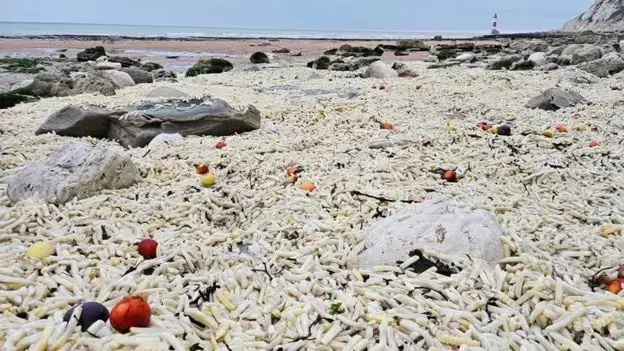
Hundreds of thousands of bags of potato chips and onions, along with other cargo and packaging, have been found strewn along beaches across East and West Sussex, following the loss of shipping containers at sea during recent stormy weather. Volunteers and local authorities have been working to clear the affected shorelines as the unusual debris continues to wash ashore.
The drift of goods began after multiple containers went overboard — including at least 24 from cargo vessels off the Isle of Wight amid rough seas earlier this month. Strong tidal currents and winds carried their contents eastward along the English Channel before they were deposited on beaches including Eastbourne, Seaford and Brighton.
Among the items reported were vast quantities of crisps piled inches deep on the sand, creating a surreal spectacle that drew comparisons to “golden sands” and captured national attention. Onions were also found across Brighton and nearby beaches, mixed with plastic packaging and insulation pieces from the containers themselves.
Community Clean-Up Underway
Local volunteers have joined council teams in organising beach clearances, using social media to coordinate mass litter picks as residents work to remove food debris, plastic packaging and other fragments. Facebook posts from local news outlets show teams collecting waste along the coast, with volunteers and professionals cleaning up shipping container wreckage and spilled cargo.
Beach cleaners have noted the sheer volume of material arriving on top of the usual litter, with concerns raised not only about aesthetics but also about environmental impact. One cleaner pointed out that the synthetic materials and plastic packaging washing in are particularly worrying due to their potential harm to wildlife and ecosystems.
Environmental and Safety Concerns
Officials have urged members of the public not to touch or move debris, as some items may be unstable or pose hidden hazards. They have also advised keeping children and pets away from the washed-up material, partly because foods like onions can be toxic to animals if ingested.
The influx of debris has added strain on council resources, as West and East Sussex authorities work with volunteers and contractors to remove waste safely and organise proper disposal. Plastic packaging, insulation foam and other non-biodegradable materials pose particular challenges for cleanup and long-term environmental health.
Wider Context
Such incidents are part of a broader pattern of cargo losses at sea, particularly during periods of severe weather. In recent months, strong storms in the English Channel have been linked to several containers falling from cargo vessels, with their contents washing up far from the original site of loss.
Maritime experts note that while some container losses are unavoidable in extreme conditions, improved reporting requirements and safety measures are intended to help authorities track incidents and respond more effectively in future.
“When containers are lost at sea, the impact doesn’t stop offshore — it washes straight into coastal communities, ecosystems and public spaces.”

