

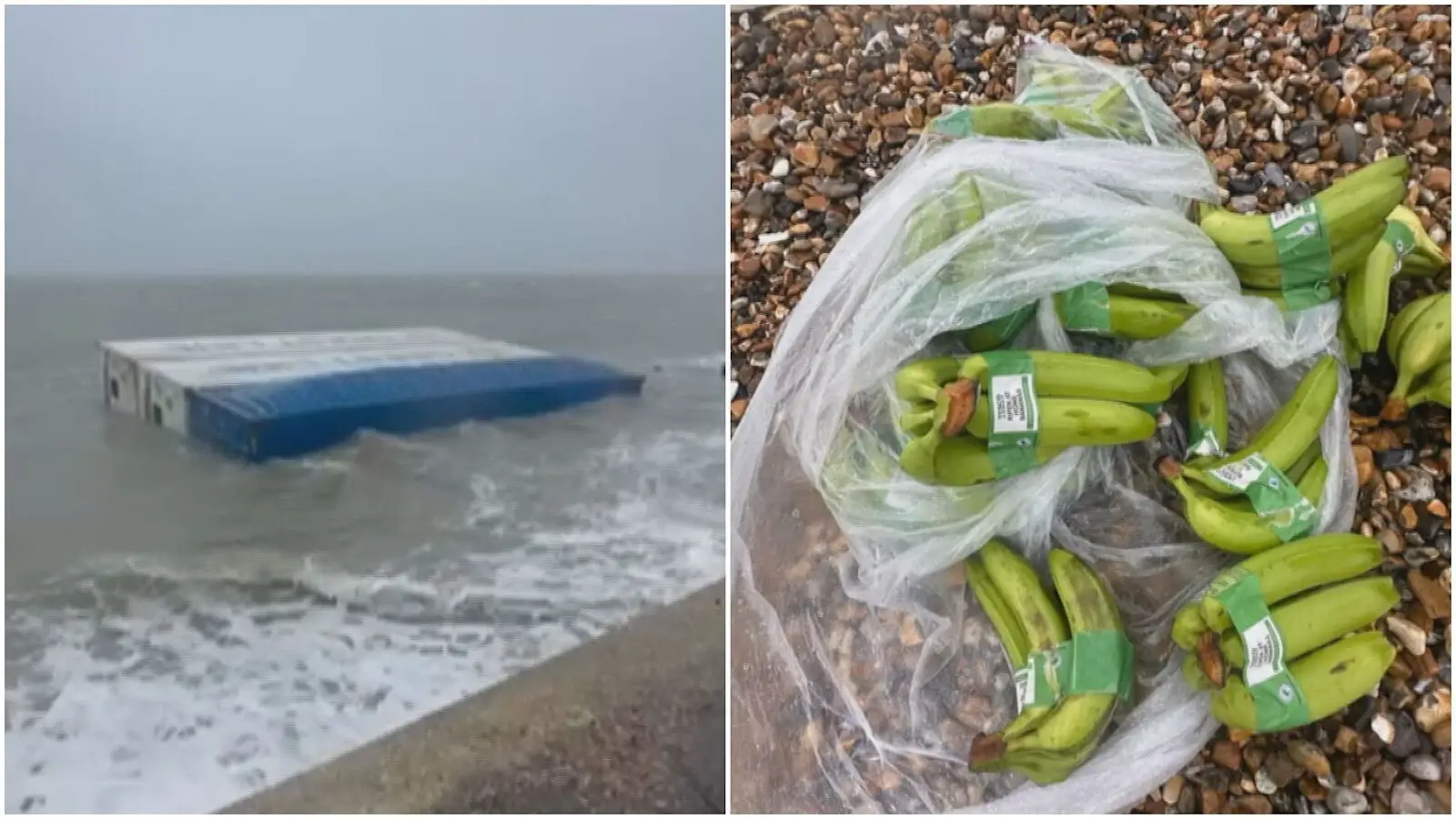
Could a shipment of bananas really cause such a scramble on our shores?
On a calm December evening, the refrigerated freighter Baltic Klipper lost 16 cargo containers somewhere near the Solent — and by morning, thousands of bananas, plantains and avocados had drifted ashore across the south coast of England.
What looked like an innocuous fruit delivery quickly turned into a beach-side spectacle — and an official clean-up operation. Containers bobbed in the surf, fruit spread across sand and pebbles, and local authorities scrambled to cordon off beaches and warn onlookers.
🍌 From Ship Deck to Shoreline: What Happened
- On 6 December 2025, as the Baltic Klipper neared the Isle of Wight, 16 refrigerated containers — mainly carrying bananas, plantains and avocados — fell overboard.
- By the next day, several had washed up on beaches in West Sussex — notably near Selsey Beach, Pagham Harbour and Bognor Regis.
- The incident caused disruption: a cruise ship departing from Southampton — MS Iona, carrying over 5,000 passengers — was delayed.
- Authorities including HM Coastguard, local police, and fire services moved fast: beaches were cordoned, a clean-up was organised, and the public was told — don’t touch the fruit or containers. Instead, any debris had to be reported under wreck regulations.
What It Felt Like For Locals (And Why It Mattered)
To passers-by, it may have looked like a surreal surprise — bunches of bananas bobbing in tide, washed up among seaweed and pebbles. Locals described overturned crates, fruit scattered across the shore, and people poking at boxes as if expecting treasure.
But beyond the odd spectacle, there was seriousness. Floating containers are dangerous to shipping traffic. Fruit from broken or salt-water-soaked containers can spoil quickly — posing environmental and health risks. The cleanup wasn’t just about removing produce — crews also had to safely remove the metal containers and check for debris or pollution.
Bigger Picture: What This Says About Shipping & Safety
This incident underscores how fragile the global supply chain can be — even a slip-up on one ship can spill produce across beaches and disrupt ports.
- It shows the risks of container loss at sea — from environmental hazard to disruption of maritime traffic.
- It underlines how perishable cargo needs special care — and how spill-resilience matters if fruit can end up littering beaches.
- For regulators and coastal authorities: swift response, public warnings and clear legal frameworks (like wreck-reporting laws) remain essential.
“You wouldn’t expect a bunch of bananas to bring a beach to a standstill — but today, they’re front-page news.”

