

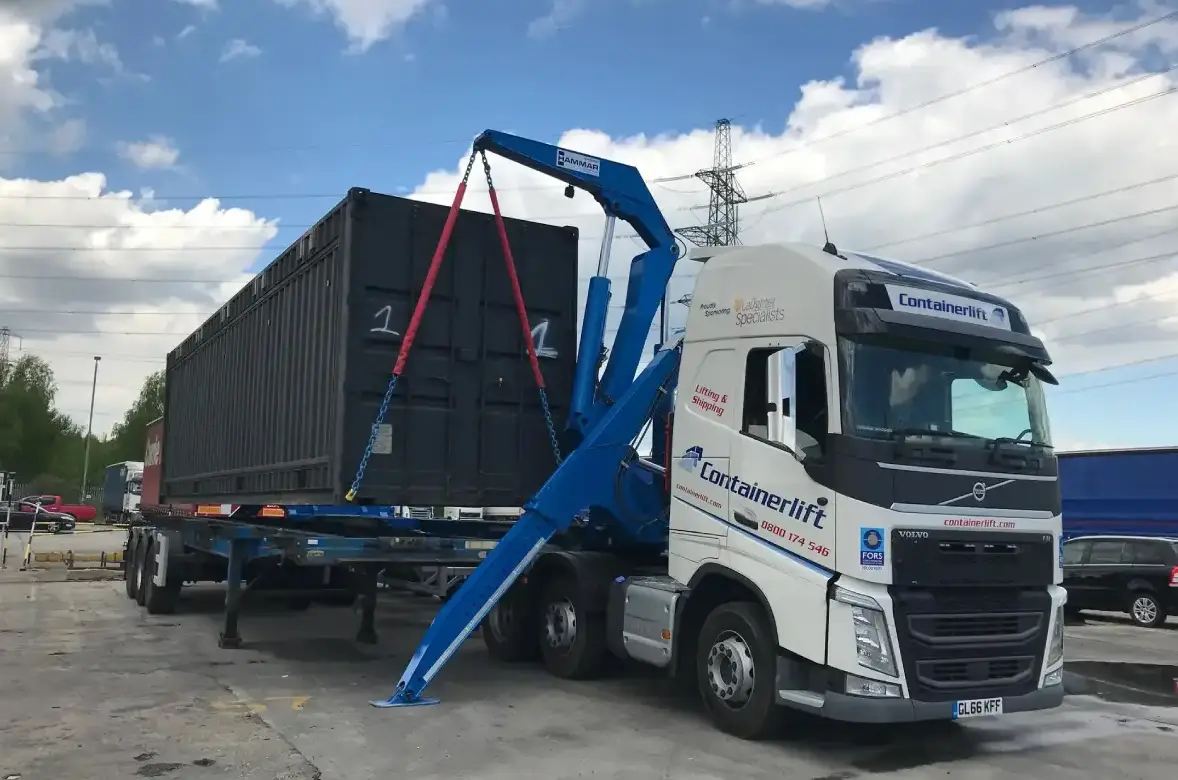
Are you absolutely certain your lorry is legal on UK roads – or are you gambling with fines, points, and a parked-up truck?
UK Weight Regulations for HGVs: If you operate HGVs in the UK, weight regulations aren’t a suggestion. They’re not “guidelines”. They’re not something you sort out after you’ve loaded it and hoped for the best. They are the line between a smooth delivery and a roadside disaster involving the DVSA, a fixed penalty notice, and a transport manager having a very bad afternoon.
In 2026, enforcement across the UK has become sharper, more data-led, and less forgiving. Weigh-in-motion systems, roadside checks, port inspections and operator compliance audits are now routine. Whether you’re running domestic haulage, container transport, or specialist movements, understanding UK weight regulations is not optional.
If you’re in container logistics – especially using sideloaders and self-loading container transport – weight compliance is even more critical. One miscalculation in gross vehicle weight (GVW), axle weight limits, or load distribution and you’re not moving. Worse, you’re explaining yourself.
Let’s break down UK weight regulations properly: the legal limits, axle rules, container considerations, penalties, and how to stay compliant.
UK Weight Regulations for HGVs
Maximum Gross Vehicle Weight (GVW) in the UK
The maximum weight your vehicle is legally allowed to operate at is known as Gross Vehicle Weight (GVW) or Maximum Authorised Mass (MAM).
For most standard UK HGV combinations:
- 2-axle rigid vehicle: up to 18 tonnes
- 3-axle rigid vehicle: up to 26 tonnes
- 4-axle rigid vehicle: up to 32 tonnes
- Articulated vehicle (5 or 6 axles): up to 44 tonnes
The 44-tonne limit is the most common maximum for articulated lorries operating in the UK.
If you’re transporting shipping containers from ports such as Port of Southampton or Port of Felixstowe, you’ll be working within these 44-tonne parameters unless you have special movement permissions.
Axle Weight Limits (Where People Get Caught Out)
Here’s where many operators slip up.
Even if your total weight is under 44 tonnes, you can still be illegal if:
- An individual axle exceeds its permitted weight
- Load distribution is uneven
- The trailer bogie is overloaded
Typical UK axle limits:
- Single steering axle: up to 8 tonnes
- Single drive axle: up to 11.5 tonnes
- Twin axle group: typically 18 tonnes
- Triple axle group: typically 24 tonnes
This is especially relevant for container haulage. A poorly positioned 20ft container can overload the drive axle even if the overall weight is legal.
Container Transport & Weight Realities
If you’re moving containers, here’s what matters.
20ft Containers
A 20ft container can legally carry heavy cargo (often 24–28 tonnes payload), which makes it easy to overload the truck before you realise.
Example:
- Tractor unit: ~8 tonnes
- Trailer: ~7 tonnes
- Loaded 20ft container: 26 tonnes
- Total = 41 tonnes
Looks fine.
But if the load inside that container is concentrated at one end, you may overload the drive axle even though you’re under 44 tonnes overall.
That’s where experience in container positioning becomes critical.

40ft Containers
40ft containers usually carry lighter goods because of volume limits before weight limits.
However:
- Uneven packing
- Incorrect weight declarations
- Misplaced heavy pallets
…can create axle imbalance.
If you operate through Containerlift-style self-loading sideloaders, you must account for:
- Additional weight of lifting equipment
- Positioning during load/unload
- Dynamic axle shift during lifting
Weight compliance is not just about driving – it’s about loading too.
Bridge Laws & Road Restrictions
Even if your vehicle is legal at 44 tonnes, certain UK roads and bridges restrict maximum vehicle weight.
You’ll see:
- 7.5 tonne limits
- 18 tonne limits
- 26 tonne limits
These are road-specific restrictions, not vehicle capability limits.
Ignoring them results in penalties and potentially invalidated insurance.
Local authority enforcement is increasingly strict, especially in urban zones.
DVSA Enforcement in 2026
The Driver and Vehicle Standards Agency (DVSA) continues to intensify enforcement.
Modern tools include:
- Weigh-in-motion systems on major roads
- Targeted roadside inspections
- Port exit checks
- Operator compliance risk scoring
Overloading penalties are structured based on how far you exceed the legal limit.
Penalties for Overloading
You can face:
- Fixed penalties (up to £300 per offence)
- Court summons
- Prohibition notices (vehicle immobilised)
- Operator licence action
- Points on licence
- Increased OCRS score (risk rating)
Repeat offences? Expect scrutiny.
Specialist Movements & Abnormal Loads
If your load exceeds 44 tonnes, you’re entering abnormal load territory.
This requires:
- Notification to police
- Route planning
- Escort vehicles (in some cases)
- Bridge authority clearance
That’s a different compliance world entirely.
Load Distribution: The Silent Killer
Weight compliance isn’t just about how much – it’s about where.
Correct load distribution ensures:
- Steering control
- Brake performance
- Tyre longevity
- Legal axle weights
Incorrect distribution causes:
- Drive axle overload
- Reduced front axle weight (poor steering)
- Increased stopping distance
If you’re lifting containers with sideloaders, distribution must be recalculated after placement.
Case Study: The 2-Tonne Mistake
A UK haulier collected a 20ft container from Port of Southampton.
Declared weight: 24 tonnes.
Actual weight: 26 tonnes.
The unit left at 45.8 tonnes gross.
Stopped at a roadside DVSA check.
Result:
- Immediate prohibition
- Fines
- Missed delivery slot
- Additional shunting costs
- Client confidence damaged
The real damage wasn’t the fine. It was the knock-on operational loss.
Best Practice for Staying Legal
- Always confirm verified container weight (VGM)
- Use calibrated weighbridges
- Train drivers on axle awareness
- Check weight distribution during loading
- Monitor OCRS compliance score
- Factor in fuel weight
- Recalculate after part-delivery
“In haulage, profit is measured in margins. Compliance is measured in millimetres and kilos.”
Why This Matters for Container Transport Operators
If you’re operating self-loading container vehicles, your business relies on:
- Precision
- Accuracy
- Planning
- Professional loading
Weight miscalculation doesn’t just cost money – it costs reputation.
And in logistics, reputation travels faster than your truck.
Call to Action
If you’re moving containers across the UK and want transport handled by professionals who understand UK weight regulations inside out, speak to Containerlift.
Legal. Efficient. Reliable.
Let’s move it properly.

