

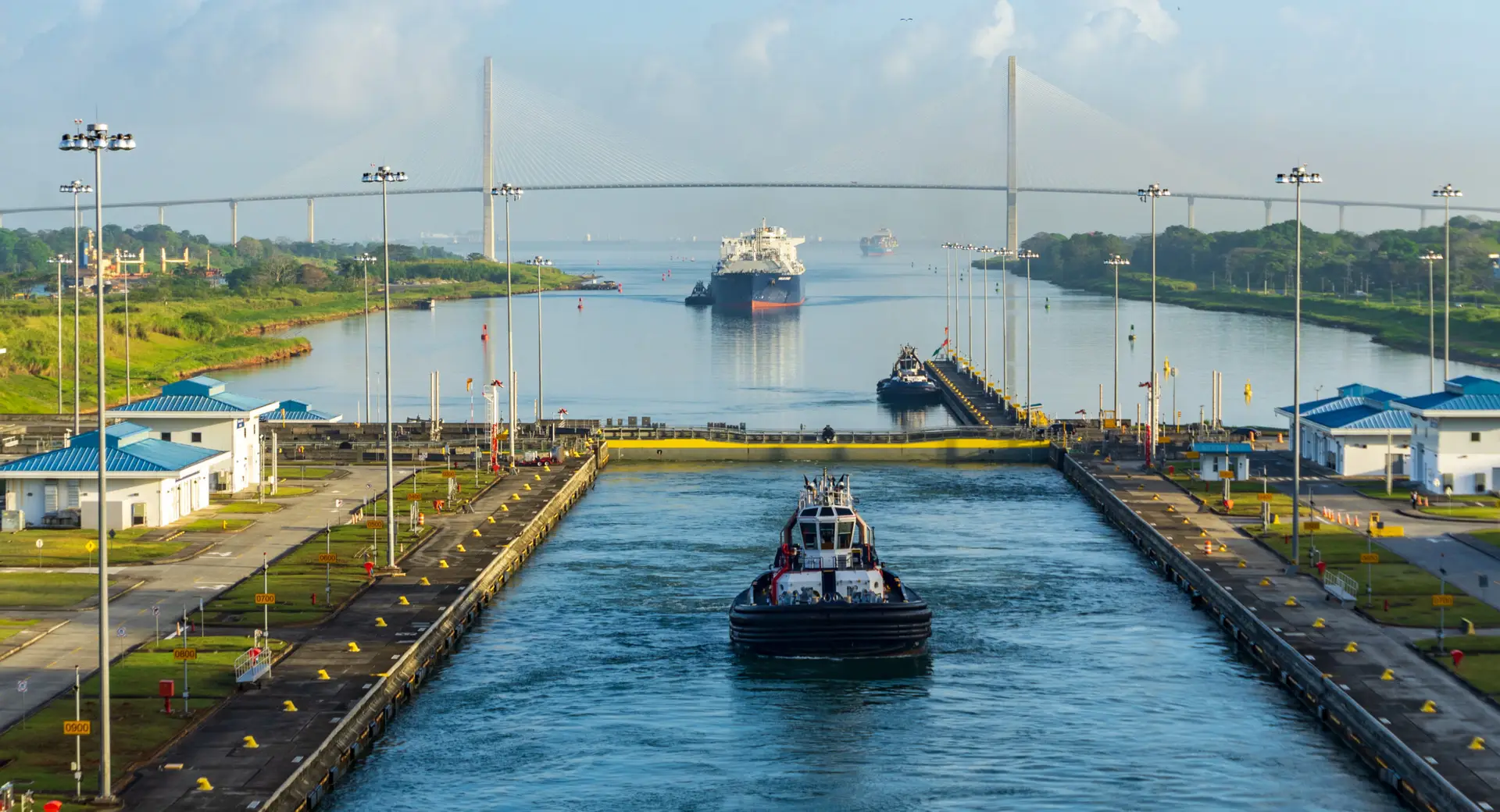
Ever wondered how one waterway could alter the course of global trade, engineering ambition and international politics all at once?
Let’s dive into the captivating saga of the Panama Canal — a 50-mile (roughly 80 km) stretch of water connecting the Atlantic and Pacific Oceans, yet far more than just a shortcut for ships. It’s a living testament to human daring, nature’s caprices, and geopolitical chess-moves. From its gutsy beginnings and marvels of civil engineering, through decades of tug-of-war politics, to the modern era of droughts, energy corridors and shifting global trade flows — the canal remains one of global logistics’ great linchpins.
In this updated article, we’ll explore the canal’s rich historical tapestry, its strategic significance, the amazing engineering that enables it, the current challenges (think climate, trade slowdowns, infrastructure upgrades) and the subtle (and not-so-subtle) drama that plays out behind the scenes. Whether you’re drawn by engineering feats, economic strategy or international intrigue — the Panama Canal has it all.
“The Panama Canal is not merely a cut in the land — it’s a chord in the symphony of world trade, geopolitics and engineering ambition.”
1. A quick historical run-through
1.1 Origins and early ambitions
The idea of carving a waterway across the Isthmus of Panama isn’t new; colonial powers, engineers and explorers pondered it. But the daring leap came from the United States (following earlier French efforts) in the early 20th century.
1.2 Completion and American control
The canal officially opened in 1914 under U.S. supervision, transforming global maritime routes by offering vessels a much shorter path between oceans.
1.3 Transfer to Panama
In 1999 control was transferred to the nation of Panama under the Torrijos–Carter treaties, making the canal’s destiny firmly Panamanian—though its global importance didn’t diminish.
1.4 Modern expansion
From 2007–16 the canal underwent the “Third Set of Locks” expansion project, enabling significantly larger “New Panamax” vessels to transit. Wikipedia+1

2. Engineering marvel and operational logistics
From lift locks to gravity-fed basins, the engineering behind the canal remains awe-inspiring.
- The original locks operate using gravity: water flows in and out without pumps, raising and lowering ships between sea level and Gatun Lake.
- The expansion involved unlocking larger chambers (180 ft wide, 1400 ft long, 60 ft deep) and new channels, doubling capacity. Wikipedia
- Water usage remains a crucial constraint — given Panama’s seasonal rains and population demands.
3. Strategic location and global trade importance
Why does this canal matter so much? A few headline motives:
- It allows ships to bypass the lengthy, risky journey around the southern tip of South America (Cape Horn).
- It forms a vital link for U.S., Asian and Latin American trade routes.
- It’s a strategic asset in energy, commodities, containers and logistics chains.
As of 2025 the canal’s operator is directing efforts towards new markets — for example, doubling volumes of liquefied petroleum gas (LPG) transits in response to slower global trade. Autoridad del Canal de Panamá+1
4. Geopolitics, business and the drama behind the scenes
Things get interesting here — not just technical but deeply political.
4.1 Droughts, water risk and infrastructure
The canal’s operation is highly sensitive to rainfall and watershed levels; droughts in recent years triggered alarms. As part of its resilience strategy, the canal authority launched an US$8.5 billion plan for water storage, port capacity and a gas-pipeline corridor. FreightWaves
4.2 Trade slowdowns and the pivot to energy cargo
With global trade growth hitting headwinds, the canal is pivoting: for example, focusing more on LPG and agricultural commodities to maintain volume. gCaptain
4.3 Port concessions, infrastructure deals and international partnerships
The canal region is not immune to big business deals. In 2025 the canal authority announced that pre-qualification for new port concessions would conclude by early 2026. Reuters Also, in 2025 a legal arbitration win reaffirmed Panama’s control when Arnold & Porter won an expansion-related dispute. Arnold & Porter
4.4 U.S., China and the strategic tug-of-war
The canal has been a flash-point in U.S.–China competition. Panama’s dealings with China’s Belt & Road initiative, port control transfers to U.S. interests (e.g., deals involving BlackRock and the sale of Chinese-linked port operations) have stirred up serious geopolitics. Le Monde.fr+1
5. Modern challenges and future trajectories
What lies ahead for the canal? Here are several threads to watch:

- Climate & water security: The canal’s reliance on freshwater for lock operations means droughts or changing rainfall patterns pose real risks.
- Capacity constraints and competition: Other routes (e.g., the Suez, Northern Sea Route) and larger ships mean constant upgrading is needed.
- Diversification of services: The canal isn’t just for containers anymore — energy, LPG, and logistics hubs are becoming key.
- Geopolitical strings: With major powers eyeing maritime routes, the canal’s neutrality and ownership are more politically charged than ever.
- Technological and sustainability pressures: The canal authority is advancing “NetZero slots” for greener ships. north-standard.com
6. Case Study: Navigating Drought & Trade Slowdown (2023-25)
Between 2023 and 2025 the Panama Canal faced twin pressures: a severe drought and a global trade slowdown. Let’s explore how it responded.
In 2023-24, reduced rainfall in the canal’s watershed caused lower water levels in Gatun Lake and related supply lakes. In turn, this forced restrictions on ship transits and raised fears of bottlenecks. The economic stakes were high — delayed cargoes, diverted ships and reputational risk.
In response the canal authority announced a multi-billion-dollar water-storage and infrastructure upgrade plan (US$8.5 billion) aimed at securing future trade resilience. FreightWaves At the same time, recognising global trade volume growth was slowing, the canal pivoted by focusing more on LPG transits — a sector less sensitive to general trade downturns. For example, the canal’s share of U.S. LPG exports to Asia recovered from ~80 % in 2023-24 to over 95 % by late 2025. gCaptain+1
On the engineering side, projects to enhance port capacity, deepen/expand channels and improve water reuse systems are under way. The canal continues to stress that if it fails to adapt, it risks losing market share. Autoridad del Canal de Panamá
This case illustrates how an engineering marvel doesn’t just stand still — it must evolve in response to climate shifts, logistics trends and geostrategic shifts. The Panama Canal is doing just that, albeit not without cost, complexity and long-term risk.
7. Why this matters to you (and to the world)
If you’re in web design, content creation or digital strategy (as you are), you may wonder what relevance this has for you. Quite a bit, actually:
- The canal’s story is a masterclass in storytelling: engineering + history + geopolitics = rich narrative.
- For content creators, it offers evergreen themes: human ambition, trade flows, climate risks, global power plays.
- For business and strategy, the canal exemplifies resilience, diversification and adaptive logistics — lessons that translate to digital infrastructure, supply-chain design and user experience planning.
- In the age of global connectivity, the canal is a physical analogue of what you design online: bridging, enabling, redirecting flows (of users, data, content).
8. Final thoughts
The Panama Canal isn’t just a waterway carved through land — it’s a living symbol of how infrastructure, human boldness and geopolitics intertwine. From steam-powered ships of a century ago to LPG-laden tankers, from treaty negotiations to climate-adaptation investments, the canal evolves. Watching it is like observing the global trade system in microcosm.
For you, whether you’re reflecting on digital journeys, content flows or business models, the canal’s lessons are rich: build for resilience, diversify your services, tell the story, and anticipate change.

