

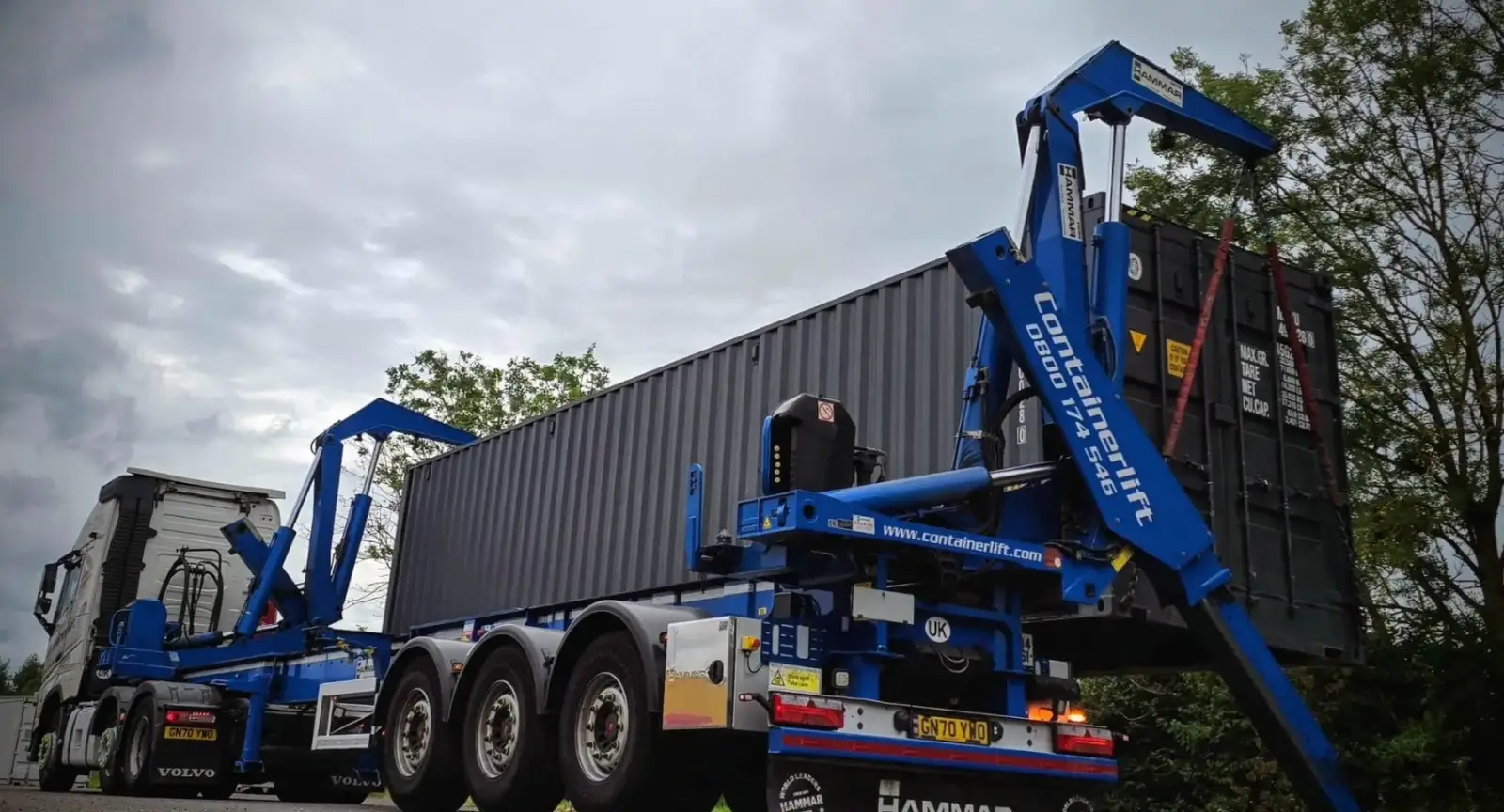
Ever tried to unload a 36-tonne container with nothing but a crane and crossed fingers?
Self‑Loading Container: If so, you’ll know it’s not just expensive—it’s an absolute logistical nightmare. Whether you’re on a tight site in central London or setting up a site office in the back end of Belgium, trying to land a steel box safely can feel like playing Jenga with shipping containers. Enter: the self-loading container vehicle. Part crane, part truck, all genius.
At Containerlift, we’ve taken container transport and added a bit of brainpower. With our fleet of specialist sidelifter vehicles operating across the UK and Europe, we can lift, move, and set down shipping containers exactly where you want them—no external lifting gear required.
It’s faster, safer, more efficient, and in many cases, cheaper. But don’t just take our word for it—this article lifts the lid on the self-loading revolution, and why it’s changing the container transport game across multiple industries.
Picture this: your brand-new 40ft container has just arrived on-site, but you’ve got no crane, no team, and no way of getting the thing off the back of the lorry without spending a fortune or risking someone’s limbs. Sound familiar? For decades, container delivery has relied on complicated logistics involving cranes, forklifts, or handballing goods in awkward, raised positions—not to mention the extra costs and delays that go with it.
But what if the lorry could do it all for you?
At Containerlift, that’s exactly what we offer. Our self-loading container vehicles are designed to take the hassle, cost, and stress out of container delivery. Using state-of-the-art sidelifter cranes mounted directly to our trucks, we can lift and drop containers of up to 36 tonnes directly to the ground. That means you can load, unload, or access your container safely at ground level, without needing a separate crane or team on standby.
In this article, we’ll explore what makes self-loading transport so efficient, who benefits from it most, and why it’s fast becoming the gold standard for anyone dealing with 20ft, 30ft, 40ft, or even 45ft containers. We’ll cover the technology behind it, the cost implications, the safety benefits—and even share a real-world case study of a client who saved over 30% on their project thanks to this clever approach.
What Is Self-Loading Container Transport?
Self-loading container transport is a system where a specially designed vehicle delivers and offloads containers without needing external lifting equipment. Using hydraulic arms—known as sidelifters—these trucks can lift containers on and off their own chassis. Think of it as having a mobile crane built into the lorry itself.
Unlike traditional container transport, which drops a container onto a trailer that requires an external crane to unload, self-loading eliminates the middleman. It’s a single solution that delivers, lifts, and leaves—saving time, money, and a whole lot of swearing.
How Does It Work?
Self-loading vehicles, like the Hammar sidelifters used by Containerlift, feature hydraulic lifting arms mounted on the truck’s chassis. These arms can extend outwards, lift a fully loaded shipping container (up to 36 tonnes), and set it down at your chosen spot. Once positioned, the container sits at ground level—ideal for loading, unloading, or long-term storage.
Our sidelifters can also be used for container transfers—moving containers from one truck to another, or from a truck to rail, making them perfect for intermodal freight handling.
The Real Benefits
1. Faster Turnarounds
No need to coordinate with crane hire firms or wait for third-party lifters. Self-loading transport means one vehicle, one job, one smooth process.
2. Reduced Costs
Hiring a crane? That’s another £500–£2,000, depending on location. Our trucks are the crane. No extra cost. No extra hassle.
3. Increased Safety
Forget dangerous overhead lifting in tight or populated areas. Our system keeps containers low, stable, and safe.
4. Access Anywhere
Tight residential street? Remote countryside? Urban construction site with no lifting infrastructure? We’ve got it covered.
5. Environmental Benefits
Fewer trips, fewer subcontractors, less fuel waste. And no need to bring in massive lifting gear just for one drop.
Who Uses It?
- Construction firms – delivering site offices and tool storage
- Retail brands – using modified containers for pop-up shops
- Events companies – setting up bars, toilets, stages
- Logistics firms – dealing with time-critical shipments
- Film & TV sets – moving scenery and storage to remote locations
- Farmers – storing equipment or crops without needing forklifts
Container Sizes Supported
Containerlift vehicles can lift and transport:
- 20ft Containers
- 30ft Containers
- 40ft Containers
- 45ft Containers
All up to 36 tonnes. So whether you’re moving a studio flat’s worth of gear or the entire stockroom for Glastonbury, we’ve got the lifting power to make it happen.
Sideloader vs Crane vs Hiab
| Feature | Sideloader | Crane | Hiab |
| Max lift weight | Up to 36 tonnes | 10–100+ tonnes | 5–12 tonnes |
| Cost | Included in delivery | £500–£2,000/day | Moderate |
| Ground-level access | ✅ Yes | ❌ Often no | ⚠️ Limited |
| Set-up time | Minimal | 2–6 hours | Moderate |
| Crew required | 1–2 | 3–5 | 2–3 |
| Ideal for | Ground placement | High lifts | Small jobs |
Common Use Cases for Self-Loading
- Residential container moves
- Temporary site storage
- Large-scale event set-ups
- Overseas freight transfers
- Construction accommodation
- Long-term static hire delivery
What About Europe?
Containerlift operates across the UK and much of Europe. Our team handles customs, permits, tolls, and logistics to get your container delivered with zero stress. Need a container dropped in Rotterdam? Berlin? Lyon? Done.
“Sidelifters have revolutionised our logistics operations, providing unparalleled efficiency and flexibility in container handling.”
If you’re looking for a container solution that lands on time, on target, and without the circus of crane hire—let’s talk. Get in touch with Containerlift today and see how our self-loading fleet can help you lift more than just expectations.

