

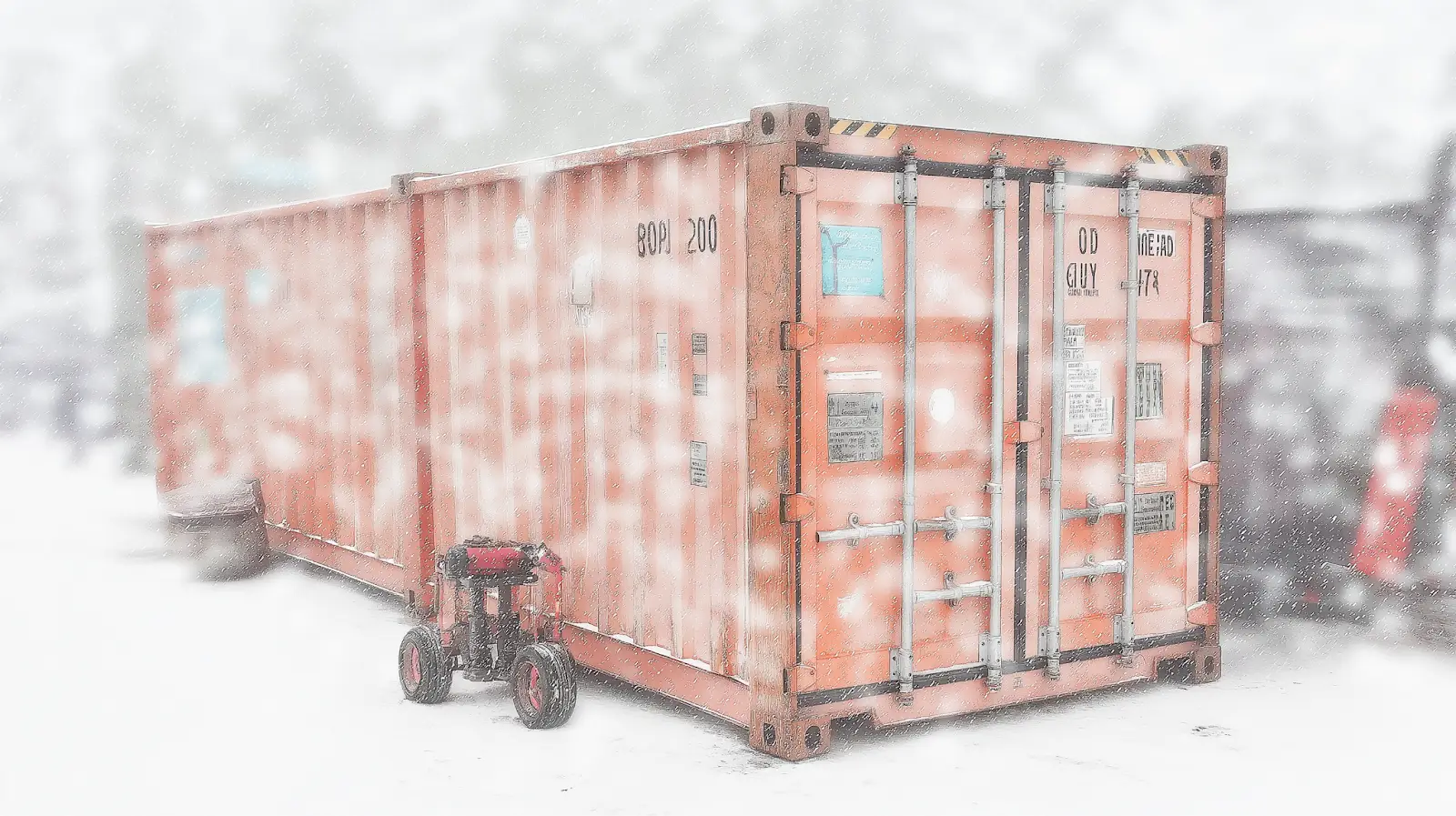
Your container says it’s “WWT” – but what does that actually mean?
Wind and Watertight Container: There it is, proudly listed in the product spec: Wind and Watertight. Sounds good, right? Sounds like it’ll keep your stuff dry, clean, and safe for eternity. But unless you’re well-versed in container lingo, it can be as clear as a foggy porthole.
What does WWT really mean? Is it the same as “Cargo Worthy”? Is it waterproof, airtight, snake-proof, or just optimistic? Does WWT cover a container that’s seen five Atlantic crossings, a couple of forklift battles, and a seagull infestation?
In this no-nonsense guide, we’ll break down what the Wind and Watertight label actually involves — and what to check for when buying or hiring a container from anyone. Especially if you’d like to keep your tools, stock, or vintage record collection un-mildewed and mouse-free.
“Wind and Watertight” is one of the most common condition descriptions you’ll see on a used shipping container. But many customers – especially first-time buyers – assume it means pristine. It doesn’t.
It means functionally sound. Nothing more. Nothing less.
At Containerlift, we only sell containers that meet or exceed that standard — but we’re the first to admit that WWT covers a broad range of appearances and ages. One WWT container might look barely touched. Another might resemble something Indiana Jones would stash treasure in.
So what does it mean, in plain English?
WWT means:
- The container won’t leak
- The doors close properly
- The seals are intact
- There are no holes (obvious or otherwise)
In this guide we’ll walk you through:
- What WWT guarantees (and what it doesn’t)
- The difference between WWT, Cargo Worthy, and One-Trip
- What to look for when inspecting a WWT container
- Why some WWT units still look a bit battered
- And whether WWT is enough for your needs
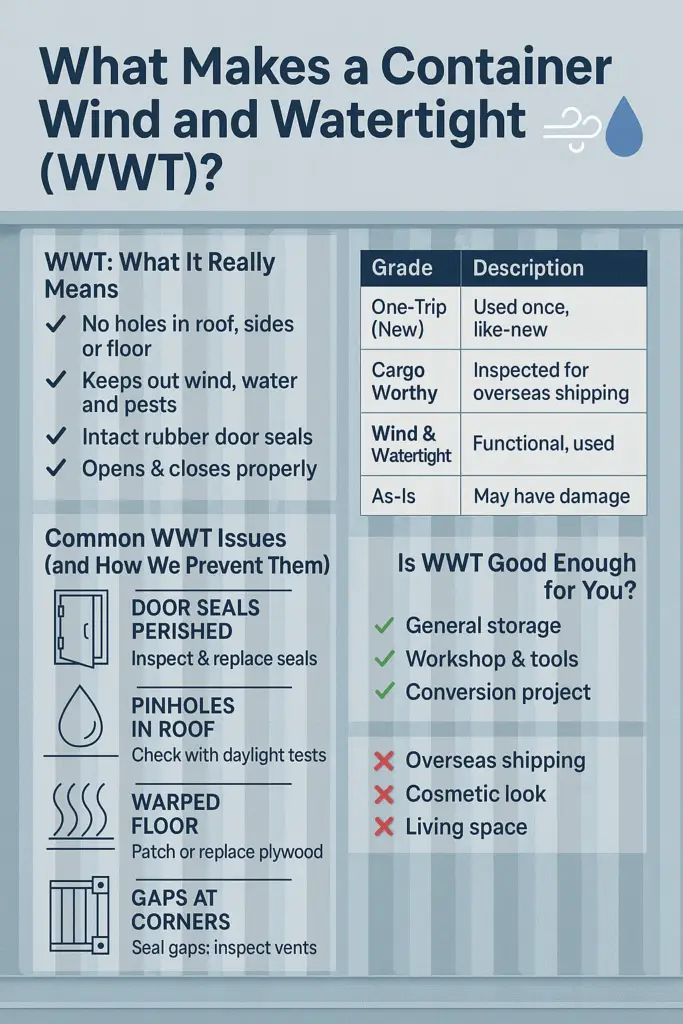
1. WWT: What It Really Means
A Wind and Watertight container:
- Has no holes in the roof, sides, or floor
- Keeps out wind, water and pests
- Has intact rubber door seals
- Opens and closes properly
It does not mean:
- Brand new paintwork
- Dent-free panels
- Certified for overseas shipping
- Structurally flawless for stacking
📦 It’s like buying a second-hand van that runs well and keeps the rain out – but don’t expect showroom sparkle.
2. WWT vs Other Container Grades
| Grade | Description | Best For |
| One-Trip (New) | Used once, like-new | Conversions, visible locations |
| Cargo Worthy (CW) | Inspected for overseas shipping | Export, stacking |
| Wind & Watertight (WWT) | Functional, used | Site storage, garden use |
| As-Is | May have damage | Only if budget is really tight |
🛠️ At Containerlift, WWT is our minimum grade — we do not sell As-Is units. Ever.
3. How Do We Check for Wind and Watertight Integrity?
Every Containerlift is:
- Visually inspected for rust, damage, and dents
- Pressure-tested using light or water
- Checked for door function and seal integrity
- Cleaned and repaired before sale or hire
We’ll never ship you a container we wouldn’t store our own tools in.
4. The Most Common WWT Issues (and How We Prevent Them)
🚪 Door Seals Perished
Old rubber cracks and warps over time. We inspect and replace seals where needed.
💧 Pinholes in Roof
Small rust points can develop into leaks. We check with daylight tests from inside.
🔧 Warped Floor
If the marine ply has swollen or cracked, we patch or replace it entirely.
🐭 Gaps at Corners
Pest entry points are sealed, and vents inspected for mesh and closure integrity.
💬 Need a container for food, textiles or electronics? Ask about refurbished or insulated WWT containers.
5. Is WWT Good Enough for You?
YES if…
- You need general storage
- You’re using it for a workshop, tools, bikes, garden gear
- You’re converting it and doing your own mods
NO if…
- You’re shipping overseas
- You need it to look spotless for customers
- You’re turning it into living space without repairs
🎨 Want it to look better? We can repaint, clean, or modify any WWT unit to suit your needs.
6. What WWT Looks Like — A Visual Expectation Check
- May have dents, scuffs, previous logo shadows
- Likely to show surface rust, especially on the roof
- Paint may be faded or patchy
- Floors will be solid, but not flawless
It’s cosmetic, not critical.
Think: “High-functioning builder’s van,” not “Tesla showroom”.
7. Should You Choose WWT When Hiring?
Absolutely. When hiring from Containerlift:
- WWT is the default minimum standard
- You’re guaranteed a sealed, clean, dry container
- All hire containers are fully checked and maintained before delivery
- You can upgrade to refurbished, repainted or high-cube versions if needed
Case Study: “We Wanted Secure Storage – Not Perfection”
Travis, a landscaper in Sussex, needed a secure unit to store equipment between jobs. He hired a 20ft WWT container from Containerlift.
He says:
“It had a few dents, sure – but it was solid, bone dry, and didn’t leak a drop. I don’t need it to be pretty – just safe, secure, and dry.”
He later bought the same unit at a discounted rate and now uses it on rotation across client sites. No rust. No worries. No regrets.
“Wind and Watertight doesn’t mean flawless — it means your gear stays dry and your roof doesn’t leak. That’s what matters.”
Call to Action:
Looking for a solid, weatherproof container for storage or hire?
✅ Every unit WWT as standard
✅ Inspected and tested before delivery
✅ Honest descriptions and clear photos
👉 Get your WWT container today

