

“Dangerous goods transport is not where businesses should practise the fine art of winging it. The paperwork, packaging and handover matter as much as the vehicle.”
Can your business move a container of dangerous goods from a UK port to site without turning the job into a paperwork bonfire, a port delay, or an expensive visit from the compliance fairy?
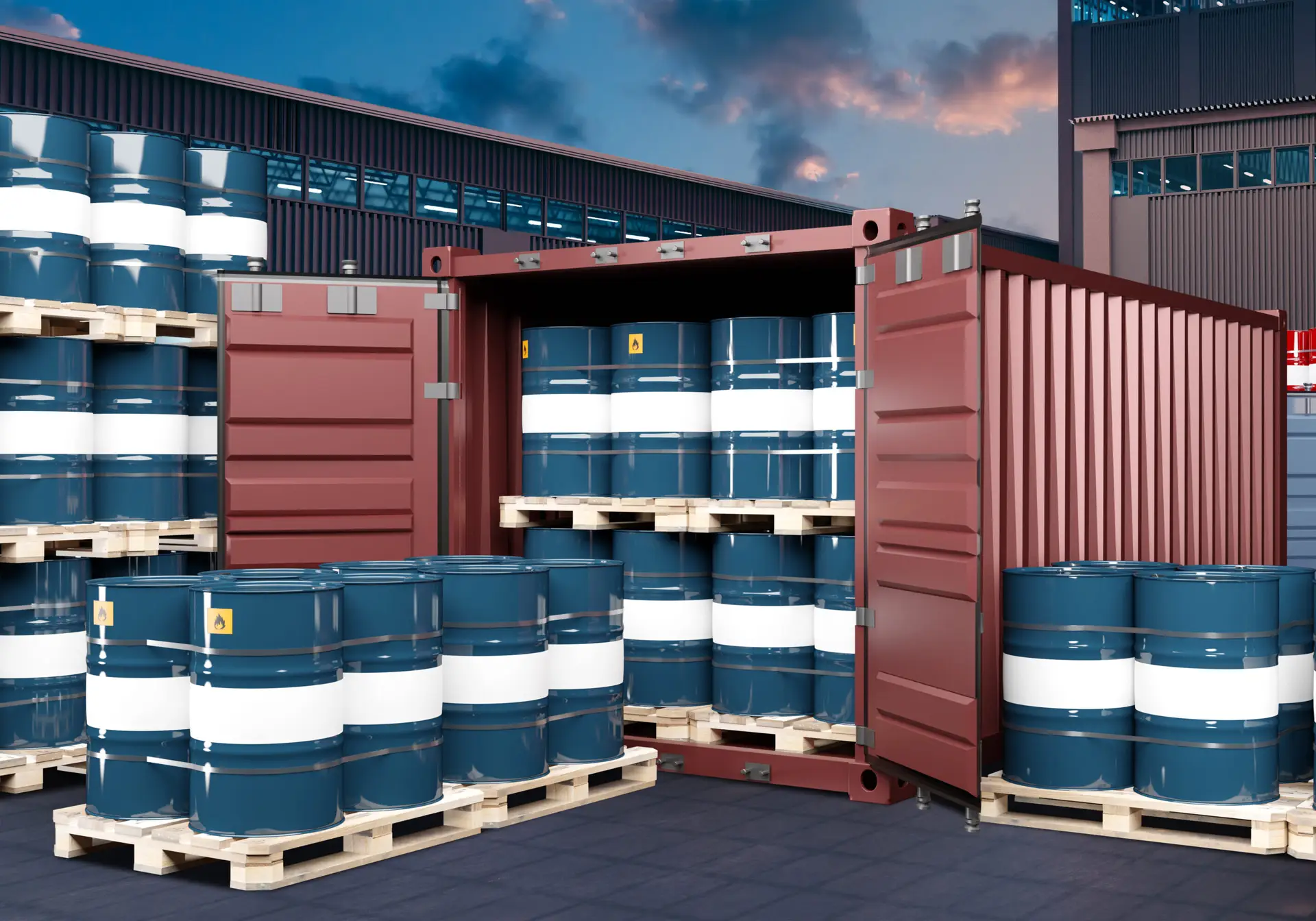
Dangerous goods container transport sounds dramatic, as if every shipment involves smoking barrels, flashing lights and someone shouting “stand back” into a radio. In reality, many dangerous goods are painfully ordinary commercial products: paints, aerosols, batteries, cleaning chemicals, adhesives, fuels, gases, resins, marine pollutants, industrial samples and even some everyday consumer goods that become much less charming when packed into a freight container and sent across a network of ports, yards, roads and customer sites.
The boring truth, which is usually where the expensive mistakes live, is that dangerous goods transport is about control. The product must be correctly classified. The packaging must match the rules. The container must be packed, labelled, documented and handled properly. The haulier, driver, site team and receiving business all need to know what they are dealing with before the wheels start turning.
For businesses importing, exporting or repositioning containerised dangerous goods in the UK, the key regulations usually sit across ADR for road transport, the IMDG Code for sea transport, and the UK Carriage of Dangerous Goods framework. That does not mean every business owner needs to become a walking regulation manual, although some people do seem to enjoy that sort of punishment. It does mean you need a competent process, clear responsibilities and a transport partner who treats compliance as part of the job rather than a small optional garnish.
Why Dangerous Goods Container Transport Is Different
A standard container delivery is already a chain of details: collection reference, port release, vehicle access, lifting method, delivery point, ground conditions, timings and site safety. Add dangerous goods and the chain gets sharper teeth. There may be restrictions on how the goods are packed, what can be loaded together, what labels or placards are needed, what documents must travel with the load, which driver training applies, and what emergency information must be available.
This is where businesses get caught out. They think the container is the product. It is not. The container is the box. The goods inside decide the rules. A 20ft container of furniture and a 20ft container of flammable liquid may look beautifully identical from a distance, which is exactly why dangerous goods rules exist. The hazard must be visible in the paperwork, on the packaging and, where required, on the transport unit. Otherwise, everyone is working blind, which is bold in the same way that reversing a forklift with your eyes shut is bold.
The UK Government’s guidance explains that dangerous goods must be packed and transported according to international rules, with classification based on the type of danger and, where relevant, packing groups that describe the degree of danger. ADR covers road carriage requirements including classification, packaging, labelling, certification and operational requirements. For sea freight, the IMDG Code applies to dangerous goods by sea and is mandatory under the international maritime framework. In Britain, road and rail rules are enforced through the Carriage of Dangerous Goods and Use of Transportable Pressure Equipment Regulations 2009, as amended.
What Counts as Dangerous Goods?
Dangerous goods are substances or articles that can create a risk during transport. The risk might be fire, explosion, toxicity, corrosion, pressure, environmental harm, reactivity or another hazard. It is not limited to the obvious villains of the warehouse. Plenty of normal stock can be regulated when moved in quantity, in certain packaging, or under particular transport conditions.
| Class | Typical hazard | Common business examples |
| 1 | Explosives | Certain pyrotechnics and specialist industrial materials |
| 2 | Gases | Compressed gases, aerosols, refrigerant gases |
| 3 | Flammable liquids | Paints, solvents, fuels, adhesives, inks |
| 4 | Flammable solids / spontaneously combustible / dangerous when wet | Matches, metal powders, some chemical products |
| 5 | Oxidising substances and organic peroxides | Pool chemicals, peroxide-based products |
| 6 | Toxic and infectious substances | Some pesticides, clinical and laboratory materials |
| 7 | Radioactive material | Specialist medical, industrial and research materials |
| 8 | Corrosives | Acids, alkalis, battery fluids, cleaning chemicals |
| 9 | Miscellaneous dangerous goods | Lithium batteries, marine pollutants, some environmentally hazardous goods |
The important bit is not whether a product sounds scary in a sales meeting. The important bit is classification. A Safety Data Sheet can help, but it is not always the final answer on its own. Businesses need the correct UN number, proper shipping name, class, packing group where applicable, tunnel code where relevant, marine pollutant status and any special provisions. Miss one of those and the whole job starts wobbling like a badly stacked pallet in a crosswind.
ADR, IMDG and the UK Rules: The Three-Letter Soup
Dangerous goods transport has a lot of acronyms, because apparently logistics was not already exciting enough. The key ones for UK container movements are ADR, IMDG and CDG.
ADR is the European agreement covering the international carriage of dangerous goods by road. It sets out requirements for classification, packaging, labelling, documentation, vehicles, driver training, equipment and operations. For UK domestic road transport, ADR is applied through UK carriage regulations. If a container is moving from a port to a UK site by road, ADR normally matters once the load is on the vehicle.
IMDG is the International Maritime Dangerous Goods Code. It applies to dangerous goods shipped by sea and includes rules around packaging, marking, labelling, documentation, stowage and segregation. The 2024 Edition of the IMDG Code, including Amendment 42-24, became mandatory from 1 January 2026. That matters for any business shipping containerised dangerous goods by sea because port documentation and container acceptance can depend on IMDG compliance before the container ever reaches the road leg.
CDG refers to the Carriage of Dangerous Goods and Use of Transportable Pressure Equipment Regulations. In Great Britain, these regulations provide the legal framework for enforcing dangerous goods carriage rules by road and rail. That is the unglamorous bit that turns guidance into consequences. And consequences, as every operations manager knows, are rarely delivered with a scented candle and a polite apology.
The Business Responsibilities You Cannot Outsource Completely
A good haulier can manage the road movement. A freight forwarder can help coordinate international shipping. A port operator can apply its procedures. A Dangerous Goods Safety Adviser can advise. But the business placing the goods into transport still has duties. Responsibility does not disappear just because a purchase order has the word transport on it.
The consignor usually has to make sure the goods are correctly classified, authorised for carriage, properly packed, marked, labelled and documented. The packer has responsibilities around compliant packaging and packing methods. The loader must consider compatibility, securing and safety. The carrier needs the right information, driver, vehicle, equipment and procedures. The consignee needs to receive and unload safely. In a neat world, every role is clear. In the real world, one business may wear several hats and then wonder why the compliance hat is on fire.
This is why early communication matters. Before booking transport, provide the UN number, proper shipping name, class, packing group, quantity, container number if known, Safety Data Sheet, dangerous goods note where applicable, and any special handling requirements. Do not wait until the driver arrives and then reveal that the container contains corrosive liquid, because that is less ‘operational update’ and more ‘plot twist’.
Documentation: The Paperwork That Actually Does Something
Dangerous goods paperwork is not admin theatre. It tells carriers, ports, drivers, emergency responders and receiving sites what is being moved and how it should be handled. For containerised dangerous goods, the paperwork may include a dangerous goods transport document, container packing certificate or combined dangerous goods declaration for sea, Safety Data Sheets, port booking details, customs documentation, and delivery instructions.
The details need to match. Product descriptions, UN numbers, class labels, quantities, packing groups and container references should not disagree with one another like a committee meeting after bad coffee. Mismatches can trigger rejected bookings, delayed collections, port holds or additional checks. Worse, bad information can leave the wrong people making safety decisions with the confidence of a man reading a map upside down.
For UK road movements, the driver also needs written instructions and the correct information about the load. The carrier needs to know whether ADR thresholds, exemptions or full requirements apply. Some smaller loads may fall under limited quantities or other exemptions, but exemptions are not magic invisibility cloaks. They have conditions, and those conditions need to be understood before anyone starts celebrating with the office biscuit tin.
Packaging, Labelling and Container Packing
The HSE guidance on dangerous goods packaging makes an important point: compliant packaging is not just any container that happens to shut. Dangerous goods packaging must be appropriate for the substance, packing group, quantity and transport mode. UN-approved packaging markings indicate the type of packaging, performance level and certification details. Intermediate Bulk Containers, drums, boxes, cylinders and other packages may all have different requirements.
Inside the freight container, the cargo must be packed and secured so it will not shift, leak, rupture or react during transport. This includes checking closures, caps and lids, using appropriate dunnage, avoiding damage, segregating incompatible goods, managing weight distribution and ensuring that labels remain visible where required. A dangerous goods container that has been packed like someone lost a fight with a warehouse is not a logistics plan. It is a future incident report stretching its legs.
Businesses should also remember that sea and road rules can overlap but are not identical. A container packed for IMDG sea movement still needs to be suitable for the onward road leg. The port-to-site journey may be shorter than the international leg, but short distances are not automatically low risk. Most accidents are irritatingly local. They do not wait until the goods have travelled a suitably cinematic number of miles.
Vehicle, Driver and Equipment Requirements
For ADR road transport, the carrier must assess whether the vehicle and driver meet the applicable requirements. Drivers carrying dangerous goods may need ADR training certificates, depending on the load and exemptions. Vehicles may need appropriate marking, placarding, fire-fighting equipment, personal protective equipment, wheel chocks, warning signs, eye rinsing liquid, emergency instructions and other kit depending on the goods carried.
This is why booking dangerous goods transport should not be treated like ordering a taxi. The carrier needs details early enough to allocate the right vehicle, driver and equipment. If the movement involves a sideloader or specialist container delivery, planning is even more important because the delivery method, site access, lifting area and ground conditions must all be suitable. A compliant road movement can still go sideways if the destination site is a muddy slope, the turning area is blocked, or the unloading zone is next to the staff smoking shelter. Health and safety bingo, but without the fun prizes.
Site Delivery: Where Compliance Meets Real Life
Port collections and road movements are only half the story. The final site has to be ready to receive the container. That means clear access, suitable ground, a safe unloading position, a competent site contact, and awareness of what is inside the box. If the container cannot be placed safely, the driver may not be able to complete the delivery. When dangerous goods are involved, improvisation is not charming. It is the logistics equivalent of juggling kettles.
Before delivery, businesses should check whether the site has any restrictions on hazardous substances, spill response capability, fire control measures, drainage protection, segregation areas, security requirements or environmental permits. If the goods are being stored in the container after delivery, storage rules may also apply. Transport compliance does not automatically make long-term storage compliant. That is a separate can of worms, and the worms have paperwork.
Common Mistakes Businesses Make
- Assuming a product is not dangerous because it is common, retail-friendly or neatly branded.
- Sending the haulier an incomplete Safety Data Sheet instead of proper transport details.
- Using packaging that is fine for storage but not certified or suitable for transport.
- Forgetting that lithium batteries, aerosols, paints, adhesives and chemicals can fall under dangerous goods rules.
- Leaving labels, placards or marks until the last minute and hoping the port will be feeling generous.
- Booking a vehicle before confirming ADR requirements, quantities and exemptions.
- Failing to prepare the delivery site, especially for sideloader access and safe placement.
- Treating exemptions as shortcuts rather than conditional rules.
- Not involving a Dangerous Goods Safety Adviser when the business activity requires one.
- Keeping transport, warehouse, purchasing and compliance teams in separate silos, because apparently avoidable chaos needed a seating plan.
Dangerous Goods Safety Advisers: When You Need Competent Help
Many businesses involved in the carriage, packing, loading, filling or unloading of dangerous goods may need to appoint or consult a Dangerous Goods Safety Adviser, commonly shortened to DGSA. A DGSA can advise on compliance, training, procedures, incident reporting and the practical application of ADR. This is not just for huge chemical companies with mysterious tanks and complicated pipes. Smaller businesses can fall within scope too, depending on what they do and how often they do it.
The sensible approach is to decide early whether your operation needs DGSA input. If the answer is yes, involve them before the shipment is booked. Paying for good advice at the start is usually cheaper than discovering at the port gate that your paperwork is having an existential crisis.
A Practical Pre-Booking Checklist
- Confirm the exact goods, UN number, proper shipping name, hazard class and packing group.
- Check whether the goods are permitted for the intended mode of transport.
- Confirm whether ADR, IMDG, limited quantities or any exemptions apply.
- Use compliant packaging and check packaging marks, condition and closures.
- Prepare accurate dangerous goods documentation and make sure all references match.
- Confirm labels, marks and placards required for packages, containers and vehicles.
- Give the carrier complete information before booking the vehicle.
- Check driver, vehicle and equipment requirements with the carrier.
- Assess whether incompatible goods are being mixed in the same container.
- Prepare the delivery site for access, unloading, emergency response and safe storage.
- Keep records and involve a DGSA where required.
Case Study: The Paint Import That Nearly Became a Port Problem
A UK manufacturer imports a container of specialist coatings from Europe. The product is not dramatic. It sits in neat tins, has tidy branding and looks like the sort of thing that belongs in a trade catalogue rather than a safety manual. The purchasing team books the goods, the warehouse expects delivery, and the operations team asks for a container haulier to collect from the port and deliver to site. So far, beautifully ordinary.
Then the transport planner asks for the dangerous goods details. The room goes quiet, because nothing says modern business efficiency like discovering that the most important information is attached to an email called ‘final-final-new-SDS-v3’ from six months ago. The Safety Data Sheet confirms the coating is a flammable liquid under Class 3 with a UN number and packing group. It also flags environmental information. The overseas supplier has packed the tins into cartons and loaded the container, but the UK business has not checked whether the container declaration, labels and road transport information are complete for the onward movement.
At this point, there are two possible futures. In the bad one, the container is booked as ordinary cargo, the driver arrives without the correct information, the port questions the documentation, the collection is delayed, storage charges start breeding, and everyone begins forwarding emails with the emotional energy of a collapsing circus tent.
In the better future, the business pauses before booking. It confirms the UN number, proper shipping name, class, packing group, quantity and packaging. It checks the dangerous goods declaration against the container number. It sends the carrier the transport document and delivery instructions. The carrier allocates an appropriate ADR-trained driver and confirms vehicle equipment. The receiving site prepares a safe unloading area away from drains and ignition sources, with a trained contact available. The container is collected, delivered and placed without drama. No heroic rescue. No compliance meltdown. Just good planning, which is annoyingly effective and therefore deeply unfashionable in some offices.
The lesson is not that dangerous goods transport is impossible. It is that dangerous goods container transport punishes vague information. Get the details right early and the job becomes manageable. Leave them late and the container becomes a very expensive metal box full of questions.
Conclusion
Dangerous goods container transport is not about panic. It is about precision. Businesses need to know what they are moving, how it is classified, how it is packed, what documents are required, what labels and marks apply, and whether the carrier, driver, vehicle and delivery site are suitable. The rules exist because dangerous goods can create real risks during transport, from fire and corrosion to environmental harm and emergency response complications.
For businesses moving containers from UK ports to site, the best results come from early planning. Treat dangerous goods information as part of the booking process, not as a spicy surprise for the transport office. Bring the haulier, freight forwarder, DGSA, warehouse and receiving site into the conversation before the container is due to move. It is less dramatic, yes. But drama is for Netflix, not container delivery.
Need to move a container from port to site and want the delivery planned properly from the start? Speak to Containerlift about container transport, site access, sideloader delivery and the details your business needs to confirm before booking. When dangerous goods are involved, the clever move is not to guess.
It is to plan the job properly before the container starts moving.

