

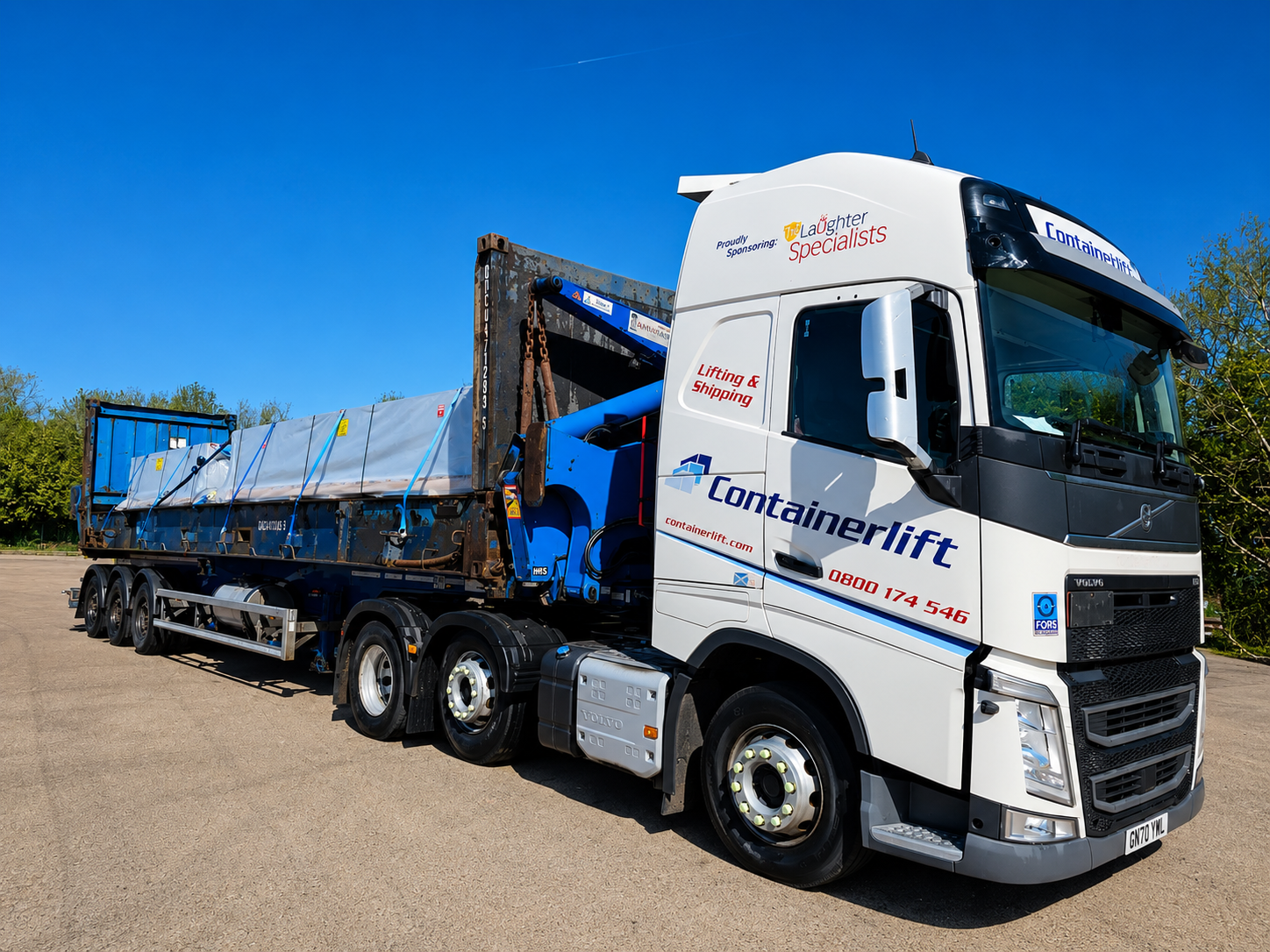
Is Your Cargo Too Big for Standard Shipping?
If your cargo hangs over the side of a trailer, towers above a container roof, or weighs enough to make a bridge inspector nervous, there’s a good chance you’re dealing with Out of Gauge cargo.
And this is where logistics suddenly stops being “book a container and hope for the best” and starts becoming specialist transport planning.
Out of Gauge cargo transport — often shortened to OOG freight — is one of the most misunderstood parts of the shipping and haulage industry. Many businesses only discover they need specialist freight solutions after a container won’t close, a route becomes inaccessible, or somebody says the words: “That’s not going to fit.”
Not ideal halfway through a project.
As global infrastructure, renewable energy, manufacturing, and construction projects continue growing, oversized freight transport is becoming increasingly common across the UK and worldwide. Industry reports suggest demand for specialist project and oversized cargo handling continues to rise as logistics adapts to larger industrial equipment, modular construction, and energy-sector expansion.
But what actually counts as oversized freight?
What makes cargo “Out of Gauge”?
What equipment is used?
And why does moving a massive machine across the country suddenly involve permits, route surveys, escort vehicles, cranes, and enough paperwork to make your printer question its purpose in life?
This guide explains exactly what Out of Gauge cargo transport means, the types of freight that fall into this category, how it’s moved safely, and what businesses need to know before arranging oversized freight shipping in the UK or internationally.
What Is Out of Gauge Cargo?
Understanding OOG Freight
Out of Gauge cargo refers to any shipment that exceeds the dimensions or weight limits of a standard shipping container or standard transport equipment.
In simple terms:
If the cargo does not fit safely inside a standard container with the doors closed and dimensions compliant, it is usually classified as Out of Gauge freight.
This can include cargo that is:
- Too tall
- Too wide
- Too long
- Too heavy
- Awkwardly shaped
- Difficult to load conventionally
Out of Gauge cargo is common across industries such as:
- Construction
- Manufacturing
- Renewable energy
- Oil and gas
- Agriculture
- Mining
- Infrastructure
- Marine engineering
Typical examples include:
- Excavators
- Wind turbine blades
- Generators
- Industrial machinery
- Steel structures
- Boats and yachts
- Tanks and silos
- Modular buildings
- Transformers
- Cranes
- Large vehicles
Some cargo exceeds container dimensions slightly.
Other cargo looks like somebody tried to ship an entire small building and casually called it “equipment”.
What Counts as Oversized Freight?
Standard Shipping Container Dimensions
To understand oversized freight, you first need to understand standard container dimensions.
A typical shipping container is:
20ft Container Internal Dimensions
- Length: approximately 5.9m
- Width: approximately 2.35m
- Height: approximately 2.39m
40ft Container Internal Dimensions
- Length: approximately 12m
- Width: approximately 2.35m
- Height: approximately 2.39m
High cube containers add additional height, usually around 2.69m internally.
Anything exceeding these dimensions may require:
- Open-top containers
- Flat rack containers
- Specialist trailers
- Heavy haulage transport
- Crane loading
- Escort vehicles
- Route planning
The Different Types of Out of Gauge Cargo
Over Height Cargo
Cargo that exceeds the height limits of a standard container.
Examples:
- Tall machinery
- Tanks
- Industrial frameworks
- Vertical production equipment
This often requires:
- Open-top containers
- Low-loader trailers
- Height route surveys
Because unfortunately bridges continue to refuse cooperation with oversized freight.
Over Width Cargo
Cargo extending beyond the standard container width.
Examples:
- Construction equipment
- Agricultural machinery
- Steel fabrications
- Boats
Over-width cargo frequently requires:
- Flat rack containers
- Escort vehicles
- Road movement permits
Over Length Cargo
Cargo exceeding container length restrictions.
Examples:
- Pipes
- Wind turbine blades
- Structural beams
- Long industrial components
Long cargo introduces additional challenges around:
- Turning circles
- Road access
- Port handling
- Storage areas
Heavy Lift Cargo
Some freight technically fits dimensionally but exceeds weight restrictions.
Examples:
- Transformers
- Generators
- Industrial presses
- Large engines
Heavy lift transport often requires:
- Specialist trailers
- Multi-axle transport
- Reinforced loading areas
- Crane coordination
Breakbulk Cargo vs Out of Gauge Cargo
These terms are often confused.
Out of Gauge Cargo
Cargo exceeds standard dimensions but may still travel partially containerised using specialist equipment.
Breakbulk Cargo
Cargo shipped individually rather than inside containers.
Examples include:
- Steel coils
- Timber
- Machinery
- Construction materials
Some OOG cargo also becomes breakbulk cargo depending on size and transport method.
Logistics terminology loves complexity almost as much as ports love paperwork.
What Containers Are Used for OOG Freight?
Flat Rack Containers
Flat racks are one of the most common solutions for Out of Gauge shipping.
These containers have:
- No side walls
- Fixed or collapsible ends
- Reinforced bases
Perfect for:
- Wide cargo
- Heavy equipment
- Machinery
Cargo can overhang the sides if safely secured and approved.
Open Top Containers
Open top containers allow cargo to be loaded from above using cranes.
Ideal for:
- Tall equipment
- Machinery
- Vertical structures
The roof is covered with tarpaulin after loading.
Platform Containers
Used for extremely oversized cargo.
Essentially:
A reinforced shipping platform with almost no sides.
Used for:
- Massive industrial cargo
- Project freight
- Large structures
How Is Oversized Freight Transported?
Road Transport
Within the UK, oversized freight often moves using:
- Low loaders
- Extendable trailers
- Step frame trailers
- Multi-axle heavy haulage vehicles
Specialist haulage companies plan:
- Routes
- Bridge clearances
- Weight restrictions
- Turning areas
- Delivery access
Because discovering a road is too narrow halfway through the journey is generally considered suboptimal logistics planning.
Sea Freight
International OOG cargo commonly moves by:
- Container ship
- RoRo vessel
- Heavy lift vessel
- Breakbulk carrier
Sea freight remains the most cost-effective solution for large project cargo globally.
However, geopolitical disruption and changing shipping capacity continue affecting global freight reliability in 2026.
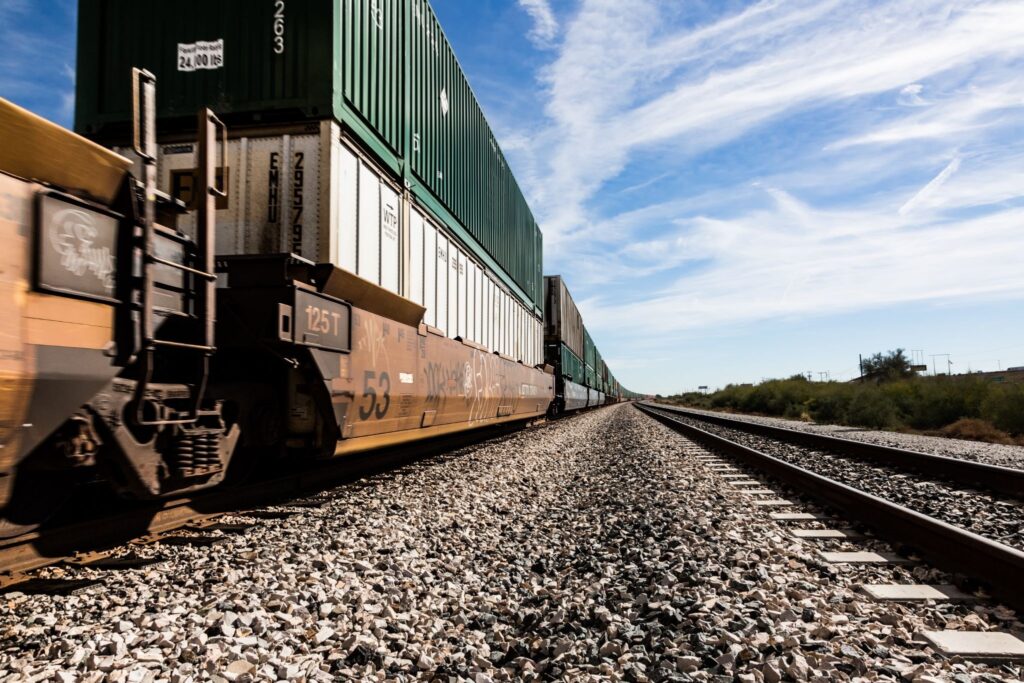
Rail Freight
Rail can support oversized freight where loading gauges allow sufficient clearance.
Rail logistics may involve:
- Special wagons
- Reduced speeds
- Route restrictions
- Infrastructure coordination
Rail loading gauge limitations remain a major consideration for oversized freight planning.
Why OOG Cargo Requires Specialist Planning
Oversized freight transport is not simply “bigger shipping.”
It introduces entirely different operational challenges.
Common considerations include:
- Port handling capability
- Crane availability
- Road permits
- Escort requirements
- Customs documentation
- Cargo securing
- Weather risks
- Route surveys
- Insurance
- Delivery access
A single missed detail can delay an entire project.
And delays involving oversized machinery tend to become expensive remarkably quickly.
The Importance of Route Surveys
Before moving oversized cargo, logistics providers often complete detailed route surveys.
These assess:
- Bridge heights
- Weight limits
- Road widths
- Roundabouts
- Overhead cables
- Site access
- Turning space
This is especially important for:
- Construction sites
- Industrial facilities
- Rural locations
The cargo may technically fit on the trailer.
The challenge is often whether civilisation itself agrees with the route.
Common Industries Using Out of Gauge Transport
Renewable Energy
Wind turbines, transformers, and energy infrastructure regularly require OOG transport.
Renewable energy expansion continues driving increased demand for specialist project cargo logistics across the UK and Europe.
Construction
Large plant equipment and modular structures often exceed standard transport dimensions.
Examples:
- Excavators
- Cranes
- Steel structures
- Prefabricated buildings
Manufacturing
Factories frequently require:
- Production lines
- CNC machinery
- Industrial equipment
- Oversized components
Transport precision matters enormously because replacement machinery is rarely sitting casually on a shelf nearby.
Oil and Gas
Heavy industrial energy projects rely heavily on:
- Pressure vessels
- Pipes
- Drilling equipment
- Processing systems
Agriculture
Modern agricultural machinery continues growing in scale.
Examples:
- Harvesters
- Tractors
- Spray systems
- Grain handling equipment
Some modern combines are effectively moving apartment blocks with tyres.
What Are the Biggest Challenges in OOG Shipping?
Cost
Specialist transport costs more because it requires:
- Specialist equipment
- Skilled operators
- Planning
- Permits
- Escorts
Delays
Oversized freight can be delayed by:
- Weather
- Port congestion
- Permit approvals
- Infrastructure restrictions
Regulatory Compliance
Each country has different oversized freight rules.
International project cargo requires careful customs and transport coordination.
Cargo Damage Risk
Improper securing or handling can damage:
- Cargo
- Roads
- Infrastructure
- Other vehicles
Which tends to make everyone involved suddenly very interested in insurance documents.
How Businesses Can Prepare for OOG Cargo Transport
Measure Everything Properly
Accurate dimensions are critical.
Never estimate.
“Roughly about this big” is not a recognised freight measurement standard.
Include:
- Height
- Width
- Length
- Weight
- Centre of gravity
Speak to a Specialist Early
The earlier logistics planning begins, the smoother transport becomes.
Especially for:
- International shipments
- Port deliveries
- Site access challenges
- Complex projects
Understand Delivery Site Access
The transport route is only half the story.
Businesses should assess:
- Entry width
- Ground conditions
- Overhead obstructions
- Unloading space
Because an oversized load arriving at a site that physically cannot receive it is the logistics equivalent of ordering a grand piano for a studio flat on the fourth floor.
The Future of Out of Gauge Cargo Transport
Global demand for oversized freight transport continues rising due to:
- Infrastructure investment
- Renewable energy projects
- Modular construction
- Manufacturing growth
- Energy-sector expansion
At the same time, logistics companies are increasingly using:
- AI route optimisation
- Real-time tracking
- Digital freight systems
- Predictive planning tools
Technology is improving visibility and efficiency across specialist freight operations.
But despite all the technology in modern logistics, moving a 70-tonne transformer through narrow British roads still occasionally depends on a man with a radio saying:
“Bit left. No, your other left.”
“Out of Gauge cargo transport is less about moving freight and more about solving problems before they happen.”
Conclusion
Out of Gauge cargo transport plays a critical role in global logistics, infrastructure, manufacturing, and construction.
If cargo exceeds standard dimensions or weight limits, specialist planning becomes essential.
From flat racks and heavy haulage to cranes, escorts, and route surveys, oversized freight requires experience, coordination, and careful execution.
Whether you are moving industrial machinery across the UK or shipping project cargo internationally, understanding OOG transport early can save significant time, cost, and operational headaches.
Because in logistics, bigger freight rarely means bigger margin for error.
Need help moving oversized freight, project cargo, or specialist containers across the UK or internationally?
Containerlift provides specialist container transport, sidelifter delivery, and logistics support for complex cargo movements across the UK and Europe.
FAQ’s
What does Out of Gauge cargo mean?
Out of Gauge cargo refers to freight that exceeds standard container dimensions or weight restrictions.
What is considered oversized freight?
Oversized freight includes cargo that is too tall, wide, long, or heavy for standard shipping containers or trailers.
What containers are used for OOG cargo?
Flat rack containers, open top containers, and platform containers are commonly used for Out of Gauge shipping.
Is oversized freight more expensive to transport?
Yes. Oversized freight requires specialist equipment, permits, route planning, and handling, increasing transport costs.
What industries use OOG cargo transport?
Construction, renewable energy, manufacturing, agriculture, oil and gas, and infrastructure sectors commonly use OOG transport.

