

You’ve ordered your container. You’ve cleared a space. You’re ready.
But here’s the question that separates a smooth delivery from a stressful one:
Is your site genuinely ready for a container delivery lorry?
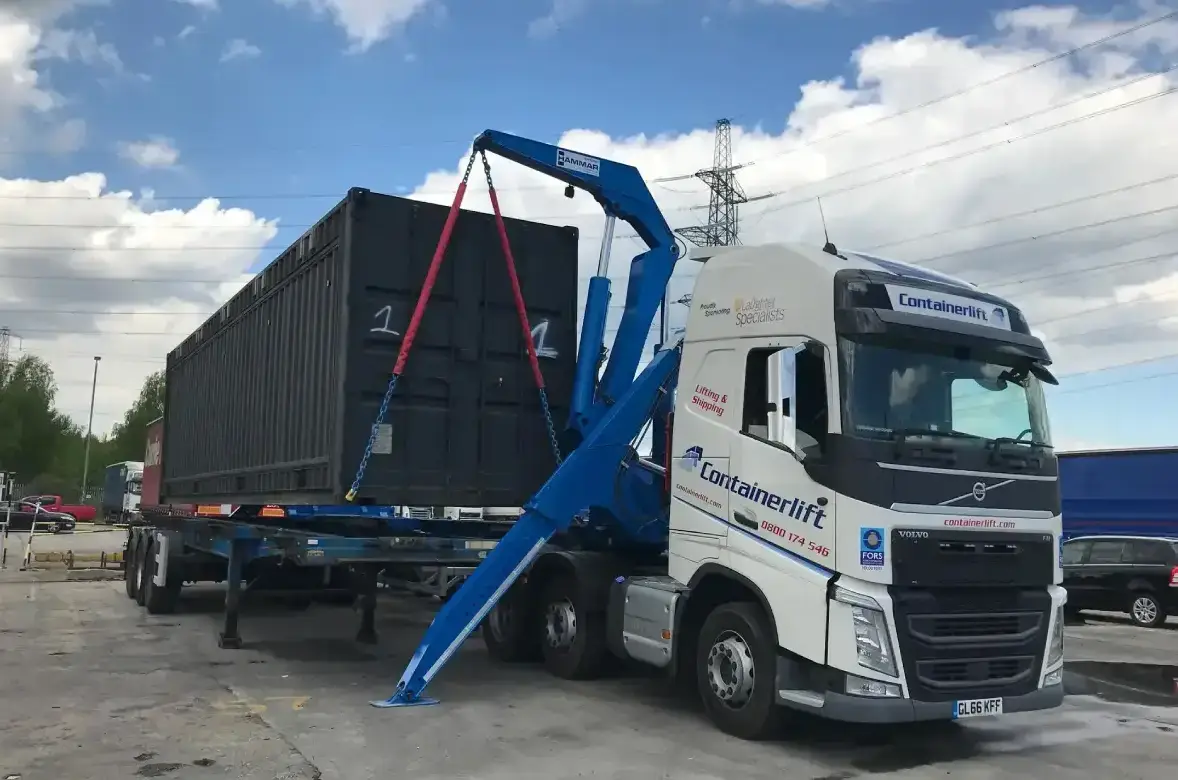
Because delivery isn’t just about dropping a metal box off the back of a truck. It’s about access, positioning, ground stability, and having the right equipment — especially if you’re using a sidelifter lorry.
If you’re buying or hiring from Containerlift, here’s exactly what makes a good container delivery site — and why a sidelifter makes all the difference.
Access Comes First — Can the Vehicle Reach You?
Before placement, before lifting, before anything else — the lorry has to get to you.
A good container delivery site has:
- Clear road access
- No restrictive width points
- No tight blind corners
- No low bridges en route
- Sufficient road strength
Industrial estates are usually straightforward. Rural lanes and residential areas? Not always.
If a heavy vehicle can’t safely reach your location, delivery becomes complicated — or impossible.
Entrance Width — The First Physical Test
Your gate or entrance must allow safe entry and exit.
You’ll need:
- Clear width (no overhanging posts)
- No protruding walls or fencing
- Firm, level ground at entry
Remember, the vehicle isn’t just driving in. It may need space to position itself precisely for unloading.
Even if your container fits perfectly once placed, access is the real decider.
Overhead Clearance — Don’t Forget to Look Up
One of the most common delivery issues?
Overhead obstructions.
Check for:
- Power lines
- Telephone cables
- Tree branches
- Building overhangs
- Signage
Now add one more consideration — lifting height.
When a sidelifter lorry unloads a container, hydraulic cranes mounted to the vehicle lift the container up and over the chassis before lowering it into position.
That means vertical clearance is crucial.
If you’re placing a high cube container near a building or boundary, make sure there’s enough height for safe lifting.
Ground Conditions — Stability Is Non-Negotiable
Containers are heavy. Delivery vehicles are heavier.
A good delivery site has:
- Solid concrete
- Compacted hardcore
- Stable yard surface
- Level placement area
Avoid:
- Wet grass
- Loose gravel
- Soft soil
- Recently disturbed ground
A sidelifter spreads weight more evenly than some alternatives, but it still requires stable ground to operate safely.
If the surface isn’t solid, lifting becomes unsafe — and delivery may be aborted.
Turning Space — Often Overlooked
It’s not just about getting in.
The vehicle needs room to:
- Align for unloading
- Deploy stabilisers
- Lift safely
- Exit cleanly
Tight industrial estates, narrow farmyards, and residential driveways often require careful positioning.
If your site has limited turning space, mention it early. Planning avoids awkward delivery-day surprises.
Why a Sidelifter Lorry Changes Everything
This is where things get interesting.
Traditional flatbed deliveries often require:
- Separate crane hire
- Additional labour
- Extra equipment
- More coordination
A sidelifter lorry, however, has built-in hydraulic cranes mounted directly to the vehicle.
Benefits of a Sidelifter Delivery:
✔ No separate crane required
✔ Faster unloading
✔ Lower overall disruption
✔ Greater placement precision
✔ Reduced need for additional labour
✔ Ideal for tight-access sites
Because the container is lifted off the side of the vehicle, it can often be placed:
- Directly alongside buildings
- Within narrow yards
- In locations that would be difficult with standard crane setups
It’s efficient. It’s controlled. And it reduces moving parts on delivery day.
For many sites, especially commercial or restricted-access locations, a sidelifter is the safest and most practical solution.
Placement Area — Prepare It Properly
Once lifted, the container must land on a stable, level surface.
Prepare:
- A flat base
- Clear of debris
- With adequate drainage
- With sufficient ground strength
For long-term use, consider:
- Concrete pads
- Railway sleepers
- Steel supports
Uneven ground can lead to door misalignment and structural stress over time.
Preparation equals longevity.
Distance From Lorry to Final Position
A key benefit of a sidelifter is its ability to place containers directly beside the vehicle.
However, containers cannot be “dragged” long distances across a site.
If the final position is:
- Behind another building
- Across soft ground
- Over obstacles
- Around tight corners
Discuss it beforehand.
Clear communication ensures the right equipment and positioning plan is used.
Urban vs Rural Delivery Sites
Urban Sites:
- Restricted parking
- Limited manoeuvring space
- Overhead wires
- Close neighbouring properties
A sidelifter minimises time on site and avoids the need for additional crane hire.
Rural Sites:
- Narrow access lanes
- Soft ground after rain
- Tree branches
- Uneven surfaces
Stability and clearance become critical.
Different locations — different considerations.
Common Delivery Mistakes
Here’s what causes most problems:
- Measuring container size but not access route
- Forgetting about lifting height
- Ignoring soft ground
- Not mentioning obstacles
- Assuming “it’ll be fine”
Delivery works best when assumptions are removed.
Case Study: Tight-Access Yard, No Crane Required
A manufacturing business in the Midlands required a 40ft container placed within a narrow yard between two industrial units.
The Challenge:
- Single-lane access road
- Limited turning space
- Overhead signage
- No room for a separate crane
The Solution:
- Early site discussion
- Clearance confirmed in advance
- Sidelifter vehicle used for delivery
- Container placed precisely without additional equipment
The Result:
- No crane hire
- No disruption to neighbouring units
- Fast, efficient placement
- Business operational the same day
Client feedback:
“We assumed we’d need a crane and extra labour. The sidelifter handled everything. Delivery was far simpler than expected.”
A good container delivery site isn’t complicated.
It requires:
- Clear access
- Stable ground
- Adequate overhead clearance
- Enough positioning space
- Proper preparation
Add a sidelifter lorry into the equation, and delivery becomes significantly more efficient and controlled.
Planning prevents problems.
Communication prevents delays.
Preparation ensures precision.
Not sure if your site is suitable for container delivery?
Speak to the Containerlift team before booking. We’ll guide you through the access checklist and explain whether a sidelifter delivery is the right solution for your location.
Get your site ready — and let delivery day run smoothly.

