

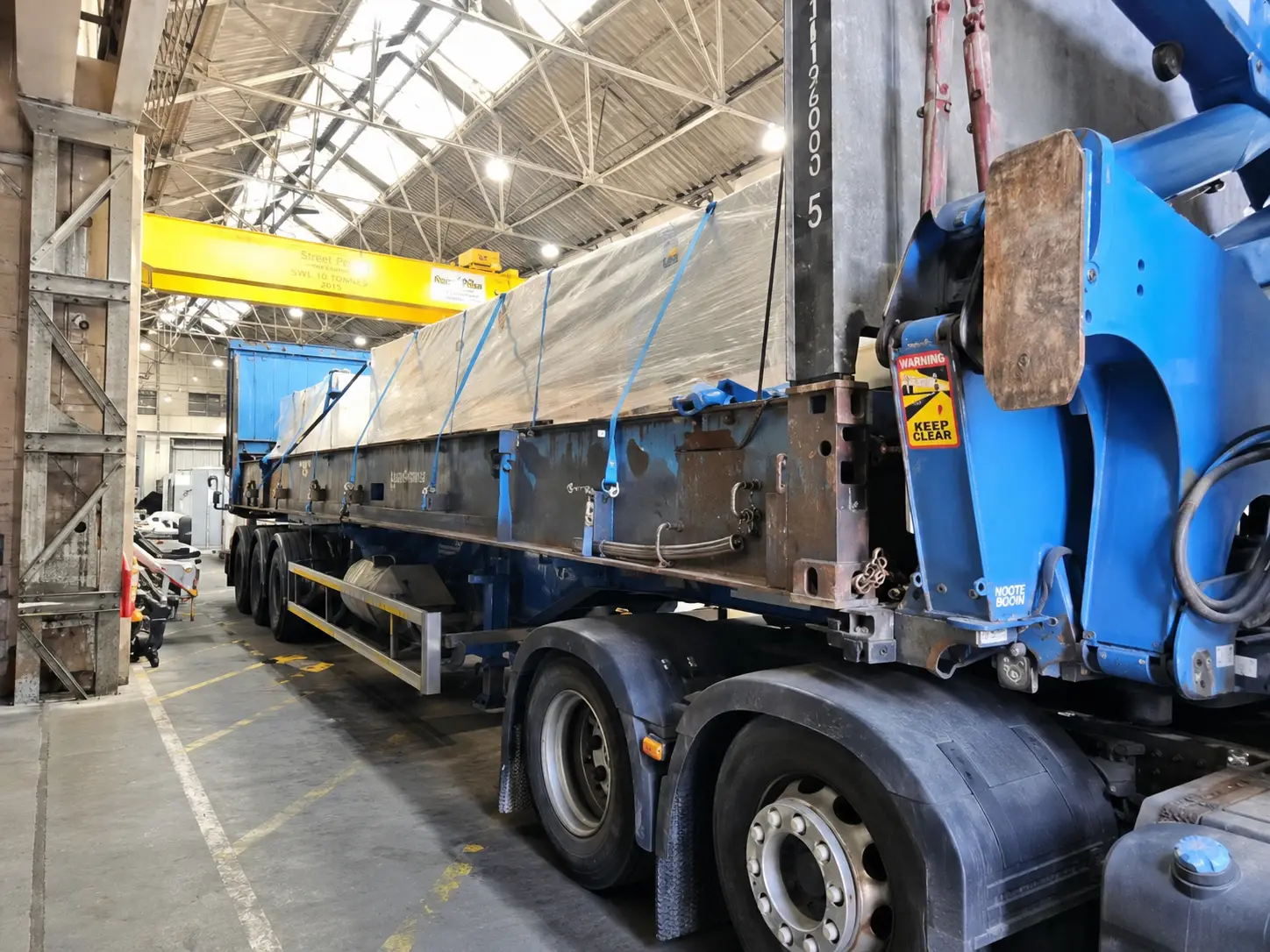
How do you move a 120-tonne turbine blade, a modular building section, or an entire production line across the world without the whole operation descending into logistical chaos?
Project cargo shipping is where standard freight rules politely step aside and the real logistics experts take over. This is not about sending a few pallets to Germany and hoping for the best. Project cargo involves oversized, high-value, heavy, or unusually shaped freight that requires specialist planning, custom transport equipment, route engineering, cranes, permits, escorts, port coordination, and sometimes a small miracle from the weather gods.
Across the UK and Europe, demand for project cargo shipping continues to rise thanks to renewable energy projects, infrastructure expansion, offshore wind developments, manufacturing upgrades, modular construction, and large-scale industrial investment. The global heavy lift and oversized cargo sectors are forecast to grow steadily throughout the decade as governments and industries continue investing in major infrastructure and energy projects.
The reality is simple. If your shipment cannot fit inside a standard shipping container, or if moving it requires specialist lifting, handling, surveys, escorts, or bespoke planning, you are firmly in project cargo territory.
And this is exactly where experience matters.
Because one wrong measurement, one missed permit, or one badly planned route can delay an entire project, cost thousands in port fees, or leave your oversized shipment parked in the middle of nowhere while someone argues with customs.
Welcome to the wonderfully complex world of project cargo shipping.
What Is Project Cargo Shipping?
Project cargo shipping refers to the transportation of oversized, heavy, high-value, or complex freight that cannot move using conventional container shipping methods.
This typically includes:
- Industrial machinery
- Wind turbine components
- Generators and transformers
- Steel structures
- Factory equipment
- Modular buildings
- Construction equipment
- Oil and gas infrastructure
- Mining equipment
- Marine equipment
- Aerospace components
Unlike standard freight forwarding, project cargo requires custom planning from start to finish.
Every shipment becomes its own engineering challenge.
Dimensions, weight distribution, lifting points, road restrictions, vessel availability, customs regulations, weather conditions, port capabilities, and destination access all need careful consideration before the cargo even starts moving.
This is why project cargo is often described as logistics mixed with engineering.
The Difference Between Standard Freight and Project Cargo
Most freight moves predictably.
A container gets loaded.
A lorry collects it.
A vessel transports it.
Another vehicle delivers it.
Project cargo laughs at this simplicity.
Large or awkward freight often requires:
- Heavy lift cranes
- Specialist trailers
- Escort vehicles
- Road closures
- Route surveys
- Port handling plans
- Lift engineering
- Multi-modal transport
- Charter vessels
- Flat rack containers
- Open-top containers
- Breakbulk shipping
And unlike container freight, where cargo fits neatly into a steel box, project cargo often sits exposed on specialist equipment.
That means securing, weather protection, weight balancing, and risk management become critical.
Because if a 70-tonne generator shifts mid-transit, nobody is having a good day.
What Counts as Oversized or Complex Cargo?
A shipment may fall into project cargo if it exceeds standard transport dimensions or weights.
This can include cargo that is:
- Too tall
- Too wide
- Too heavy
- Too long
- Difficult to lift
- Fragile
- High value
- Irregularly shaped
- Time critical
In the UK, abnormal load regulations typically apply when freight exceeds:
- 2.9 metres wide
- 18.65 metres long
- 44 tonnes gross vehicle weight
Once cargo moves beyond these limits, specialist transport planning becomes essential.
And yes, this is where permits, escorts, police notifications, and route planning suddenly become everyone’s favourite spreadsheet nightmare.
The Main Types of Project Cargo Shipping
Breakbulk Shipping
Breakbulk cargo refers to freight loaded individually rather than inside containers.
Examples include:
- Steel beams
- Industrial equipment
- Pipes
- Large machinery
- Construction components
These shipments are often lifted directly onto vessels using cranes.
Heavy Lift Shipping
Heavy lift cargo focuses on extremely heavy items requiring specialist cranes and lifting systems.
Think:
- Transformers
- Turbines
- Large generators
- Offshore equipment
Heavy lift operations require detailed lift engineering plans to ensure safe handling.
Out of Gauge Cargo (OOG)
Out of gauge cargo exceeds standard container dimensions.
This often uses:
- Flat rack containers
- Open-top containers
- Platform containers
OOG freight remains one of the fastest-growing specialist logistics sectors due to increasing infrastructure and renewable energy projects globally.
Roll-On Roll-Off (RoRo)
RoRo shipping allows wheeled cargo to be driven directly onto vessels.
Ideal for:
- Construction vehicles
- Heavy plant
- Cranes
- Military vehicles
- Agricultural machinery
Multi-Modal Transport
Many project cargo operations combine:
- Road transport
- Rail freight
- Sea freight
- Inland waterways
Because sometimes the only way to move a massive industrial component is through a logistical relay race involving half the transport industry.
Why Planning Matters More Than Transport
The transport itself is often the easy part.
The planning is where the expertise lies.
Project cargo planning typically includes:
Route Surveys
Every bridge, road width, turning radius, overhead cable, weight restriction, and junction must be analysed.
Because discovering a low bridge halfway through a 400-mile journey is not considered best practice.
Port Assessments
Not every port can handle oversized freight.
You must confirm:
- Crane capacity
- Ground bearing limits
- Storage space
- Vessel access
- Handling equipment
- Customs procedures
Permits and Compliance
Oversized cargo often requires:
- Highway permits
- Police notifications
- Escort approvals
- Port clearances
- Customs documentation
International shipments add another layer of complexity with varying regulations between countries.
Lift Planning
Heavy cargo requires engineered lifting plans covering:
- Centre of gravity
- Sling angles
- Crane configuration
- Wind conditions
- Load distribution
This is not a “that looks about right” situation.
Choosing the Right Shipping Method
Project cargo rarely uses one universal solution.
The transport method depends on:
- Cargo dimensions
- Weight
- Delivery timeline
- Destination infrastructure
- Budget
- Port access
- Handling requirements
Container Shipping
Suitable for smaller OOG cargo using flat racks or open-top containers.
Breakbulk Vessels
Ideal for large industrial freight loaded individually.
Charter Vessels
Used for extremely large or urgent projects requiring dedicated vessels.
Air Freight
Rare but possible for critical oversized cargo.
Usually very expensive.
The sort of expensive where everyone in the meeting suddenly goes quiet.
The Rise of Renewable Energy Project Cargo
One of the biggest drivers of project cargo growth is renewable energy.
Wind turbine blades, offshore foundations, transformers, substations, and modular energy systems all require specialist transport solutions.
Renewable energy is now one of the fastest-growing sectors within oversized freight transportation globally.
Modern wind turbine blades alone can exceed 100 metres in length.
Moving them requires:
- Specialist extendable trailers
- Escort vehicles
- Route engineering
- Temporary road modifications
- Detailed scheduling
And occasionally the patience of every motorist stuck behind the convoy.
Why Visibility and Technology Matter
Modern project logistics increasingly relies on:
- GPS tracking
- AI route optimisation
- Real-time shipment monitoring
- Digital customs systems
- Predictive planning tools
The logistics industry is investing heavily in AI, digitalisation, and integrated transport visibility systems throughout 2026 and beyond.
For project cargo, visibility matters because delays can affect entire construction schedules.
If one critical component arrives late, entire projects can grind to a halt.
That is why experienced logistics companies build contingency planning into every stage of the operation.
Common Challenges in Project Cargo Shipping
Port Congestion
Busy ports can delay loading and unloading schedules.
Weather Disruption
Wind speeds heavily affect crane operations and heavy lifting.
Customs Delays
Incorrect documentation can stop shipments entirely.
Infrastructure Limitations
Not all roads, bridges, or ports can handle heavy freight.
Rising Freight Volatility
Global freight pricing and vessel availability remain unpredictable due to geopolitical pressures and shifting trade routes.
How to Reduce Risk in Project Cargo
The best project cargo operations follow a simple rule:
Over-plan everything.
This includes:
- Accurate cargo measurements
- Early permit applications
- Route engineering
- Contingency planning
- Insurance coverage
- Experienced freight partners
- Proper packing and securing
- Realistic schedules
The companies that struggle with project cargo are usually the ones trying to treat it like standard freight.
It is not.
And pretending otherwise is how expensive delays happen.
Case Study: Moving a Modular Industrial Plant from the UK to the Middle East
A UK engineering company needed to transport modular processing equipment from the Midlands to a construction site in the Middle East.
The shipment included:
- Four oversized steel modules
- Two generators
- Specialist pipe systems
- Electrical control units
Each module exceeded standard container dimensions and weighed more than 60 tonnes.
The project involved:
- Specialist low-loader transport
- Police escorts
- Port crane scheduling
- Breakbulk vessel loading
- Customs coordination
- Final delivery planning overseas
The first challenge appeared immediately.
One motorway bridge along the proposed route had insufficient clearance.
A full alternative route survey was required, adding 70 miles to the journey.
The logistics team then identified a second issue.
The receiving port overseas had limited heavy lift crane availability due to another infrastructure project occupying the terminal.
Loading schedules had to be reworked to avoid expensive vessel waiting charges.
Weather also became a factor.
High winds delayed crane operations at the UK departure port by nearly 18 hours.
Fortunately, contingency time had already been built into the schedule.
Because experienced project cargo planners assume something will go wrong.
The cargo eventually arrived successfully with no damage and minimal overall delay.
Without specialist planning, the project could easily have faced weeks of disruption and substantial financial penalties.
This is why project cargo shipping is never simply about transport.
It is about coordination, engineering, timing, communication, and problem-solving.
“Project cargo is not about moving freight. It is about moving entire projects without failure.”
Final Thoughts
Project cargo shipping sits in a completely different league from standard freight forwarding.
It requires technical planning, specialist equipment, engineering knowledge, international coordination, and logistics teams that understand how to manage risk before it becomes expensive.
As global infrastructure, renewable energy, and industrial development continue expanding, project cargo demand is only heading one way.
Up.
The businesses that succeed in this sector are the ones that prepare properly, work with experienced logistics partners, and understand that oversized freight cannot be treated like ordinary shipping.
Because when your cargo weighs 120 tonnes and stretches longer than a football pitch, “winging it” stops being a strategy remarkably quickly.
FAQs
What is project cargo shipping?
Project cargo shipping involves transporting oversized, heavy, complex, or high-value freight that requires specialist logistics planning and handling.
What is considered oversized cargo?
Cargo is typically considered oversized when it exceeds standard transport dimensions or weight limits for road, sea, or container transport.
What industries use project cargo shipping?
Industries include renewable energy, construction, oil and gas, mining, manufacturing, aerospace, and infrastructure development.
What is breakbulk shipping?
Breakbulk shipping refers to cargo loaded individually rather than inside shipping containers.
How long does project cargo shipping take?
Timelines vary depending on permits, route planning, customs clearance, vessel schedules, weather, and cargo complexity.
Need help moving oversized, heavy, or specialist freight overseas? Our team understands the realities of project cargo shipping, from route surveys and heavy lifting to port handling and international coordination.
Speak to us today about planning your next complex shipment properly.

